
Role | Industrial Design Lead & Budget Manager

Design for Everyday Hero's

The Next Generation of ___________ Vehicles.
Project Overview

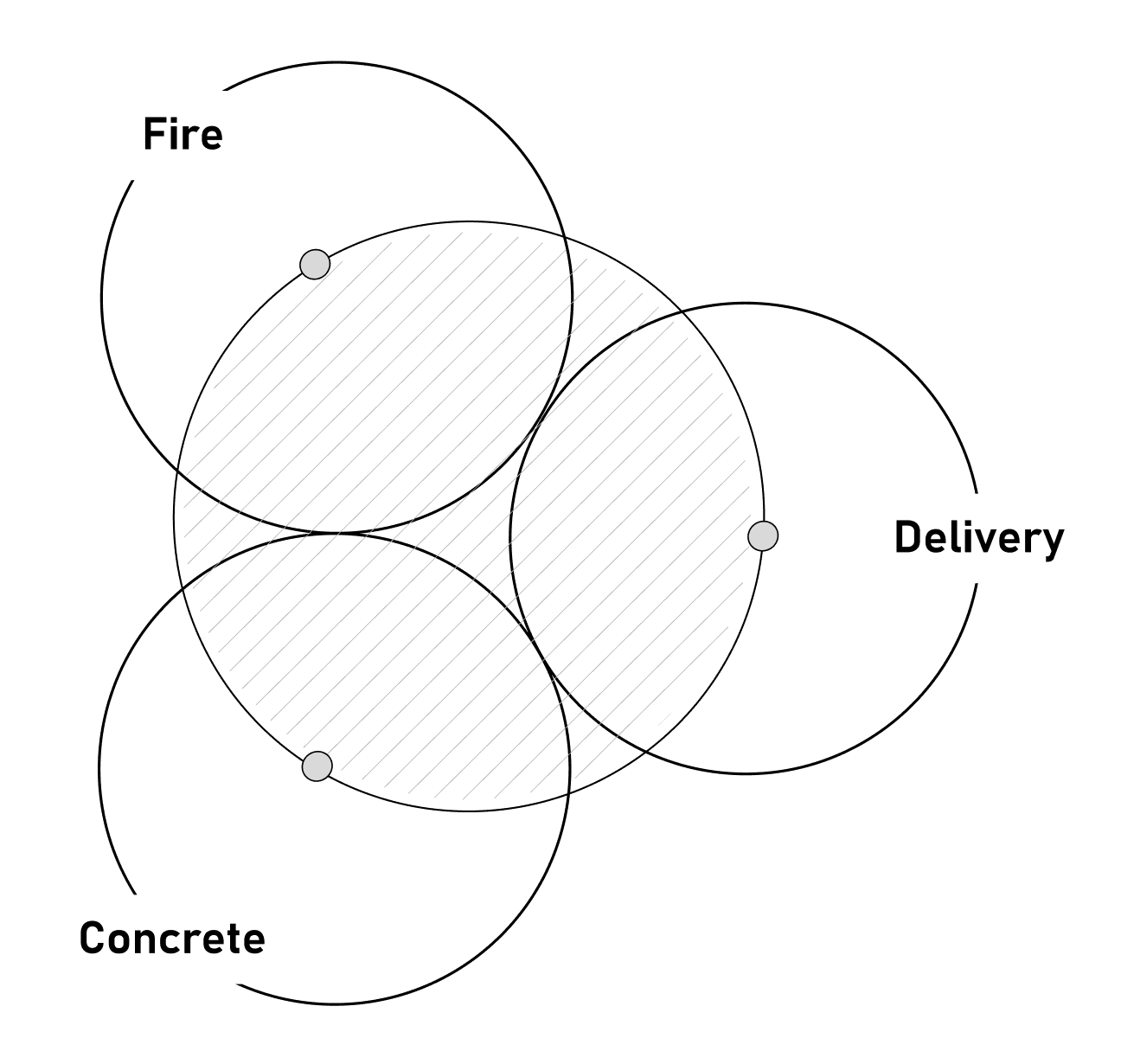
Over a ten-week design contract with Oshkosh, our team explored how small, often overlooked moments within industrial vehicles could be redesigned to create meaningful impact. Focusing on delivery, fire, and construction applications, we developed human-centered concepts that enhance efficiency, safety, and usability in high-demand environments. Through research, cross-team collaboration, and iterative prototyping, the project demonstrates how intentional design decisions can improve performance across complex, real-world systems.

My role
As the Industrial Design Lead for the firetruck team, I led research, prototyping, and the development of wireframes across multiple screen sizes in collaboration with other teams.

]My responsibilities spanned from early concept development through final design execution, ensuring all visual and functional elements aligned with the project’s overarching goals. I also oversaw budget management and key financial decisions throughout the ten-week contract.

As the Industrial Design Lead for the firetruck team, I led research, prototyping, and the development of wireframes across multiple screen sizes in collaboration with other teams.

]My responsibilities spanned from early concept development through final design execution, ensuring all visual and functional elements aligned with the project’s overarching goals. I also oversaw budget management and key financial decisions throughout the ten-week contract.

How can subtle, everyday moments be recognized and designed to create outsized impact?

During a ten-week design contract with Oshkosh, my team was tasked with identifying overlooked moments within industrial workflows and transforming them into meaningful design opportunities. Through research-driven problem solving and iterative prototyping, we developed practical, human-centered concepts focused on improving efficiency, safety, and usability. Each solution demonstrated how small, intentional design decisions can create significant impact in demanding, real-world environments.
The Delivery Truck

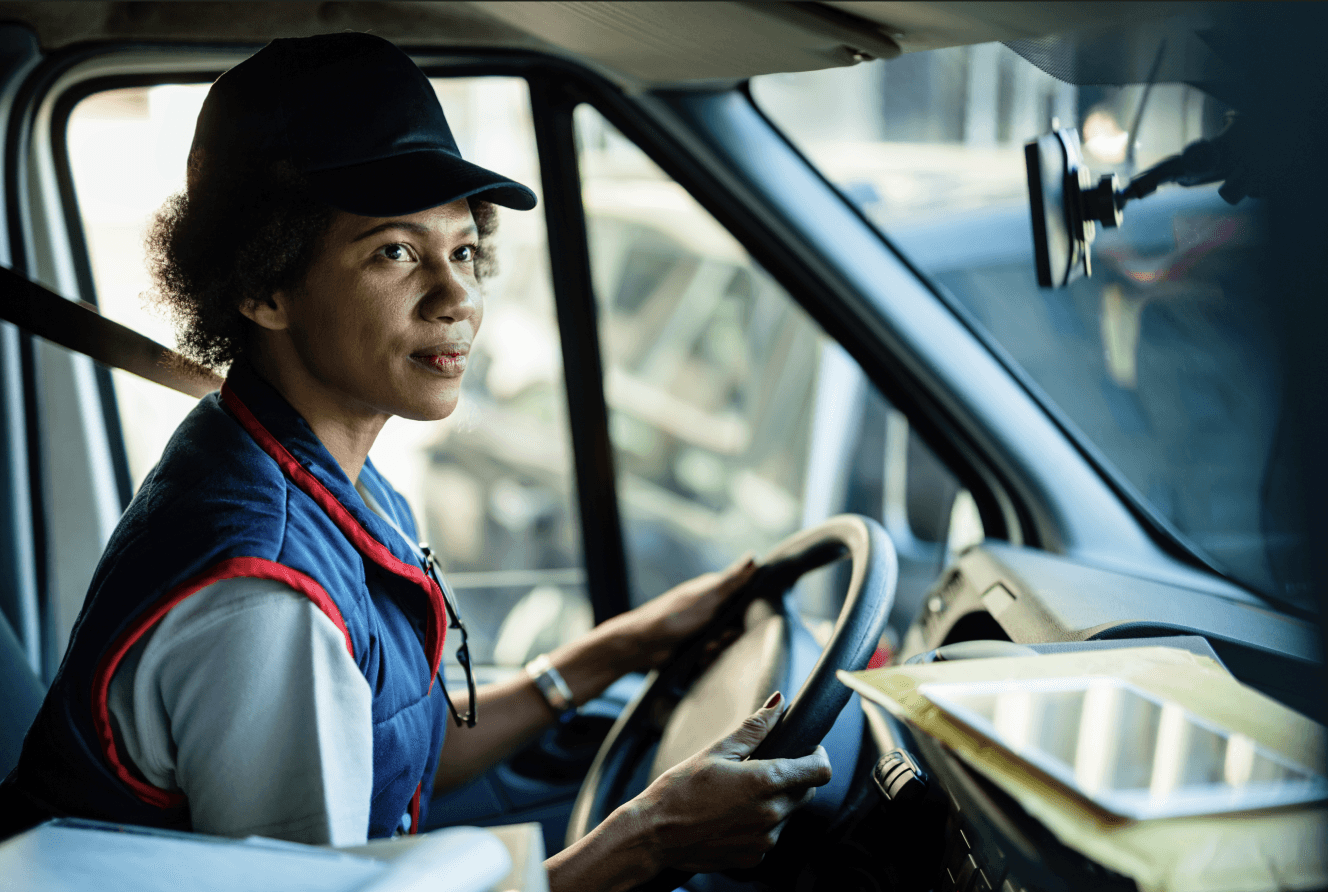
For the delivery team, the project focused on rethinking the user experience of a newly electrified truck platform. While the vehicle introduced advanced digital systems, the primary screen was positioned overhead near the ceiling, making it difficult for drivers to view while wearing standard uniform hats. This insight revealed an opportunity to improve usability by reconfiguring screen placement and refining surrounding interface elements. Through these adjustments, the design enhances visibility, reduces distraction, and better supports drivers during daily delivery operations.


The Firetruck

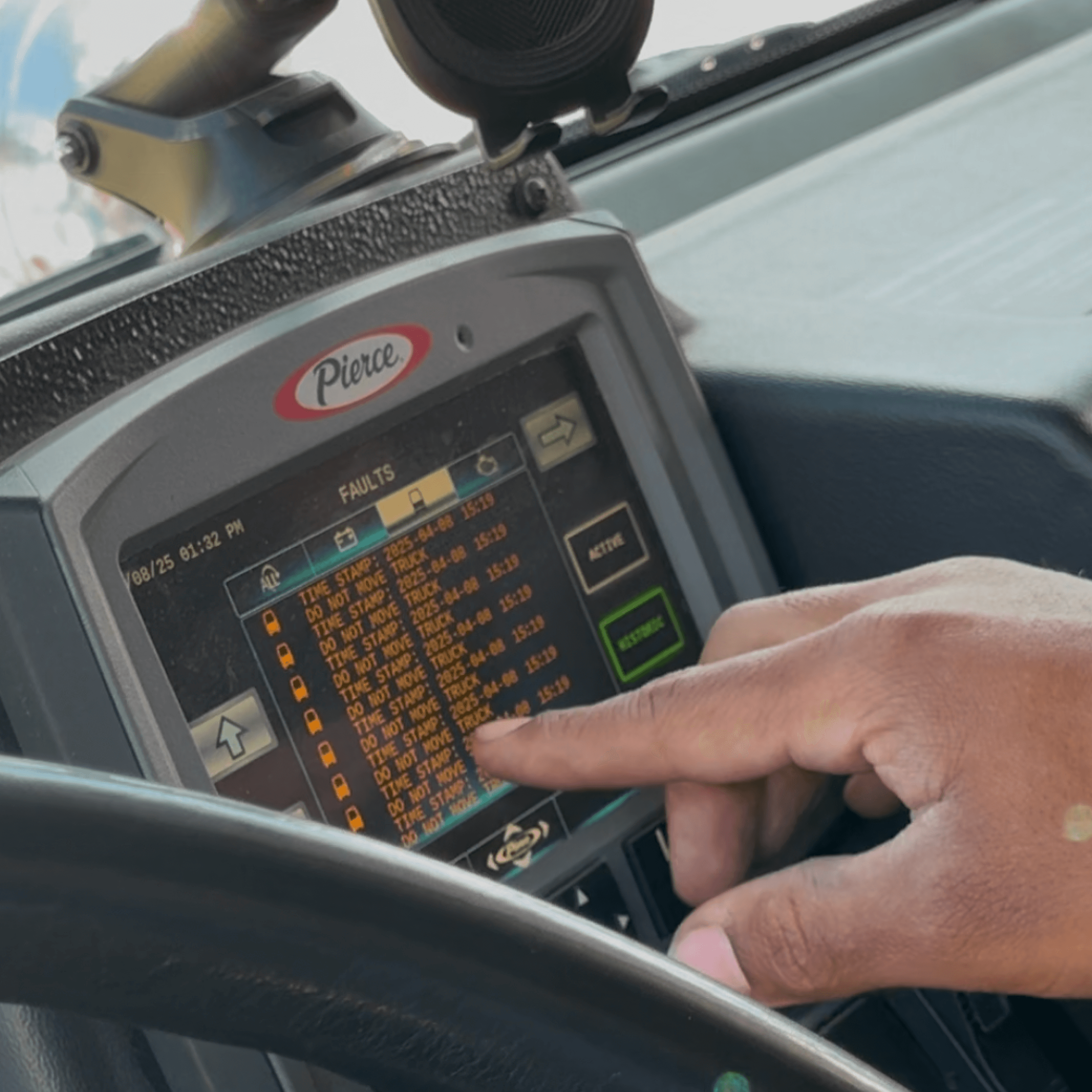
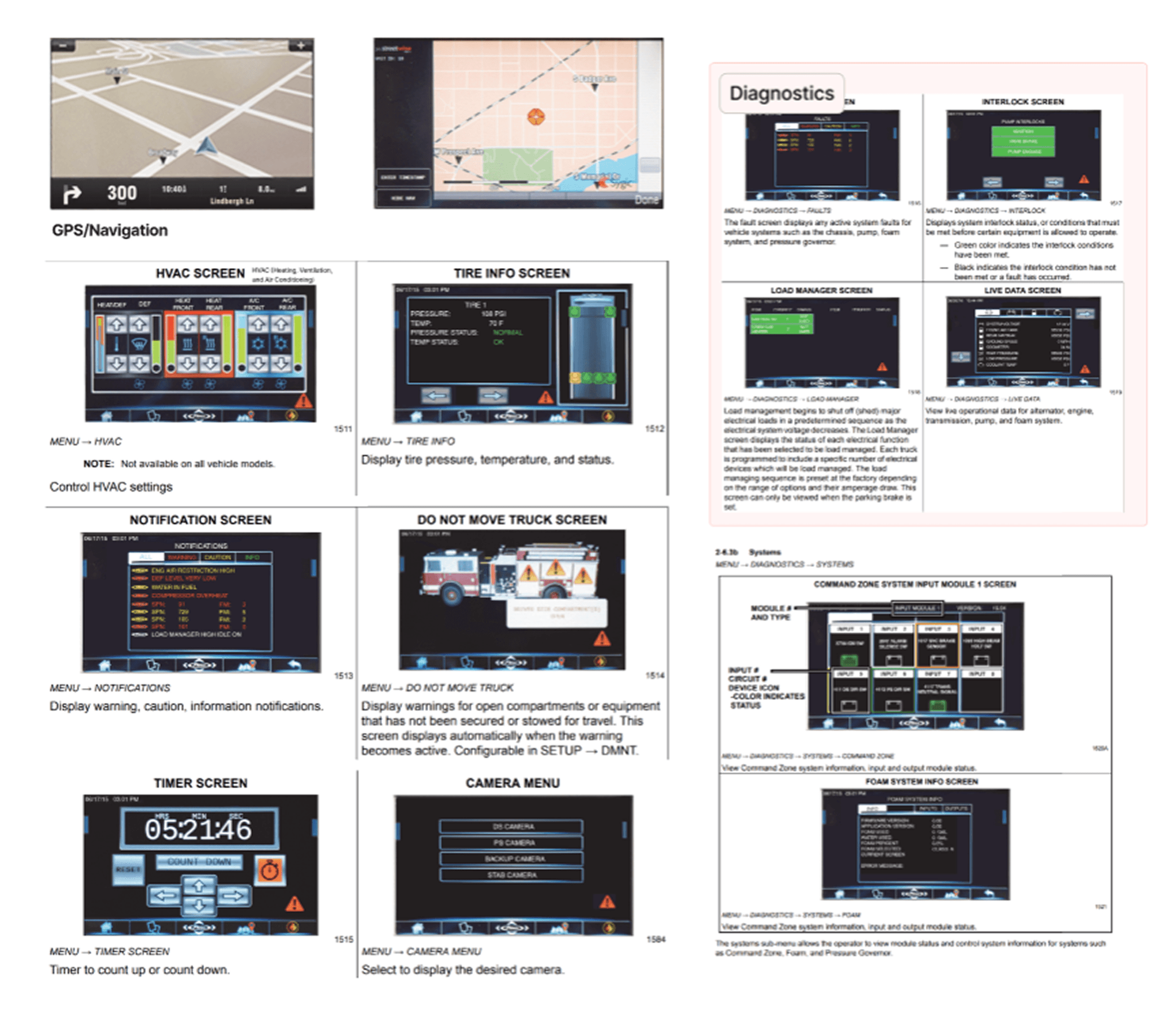
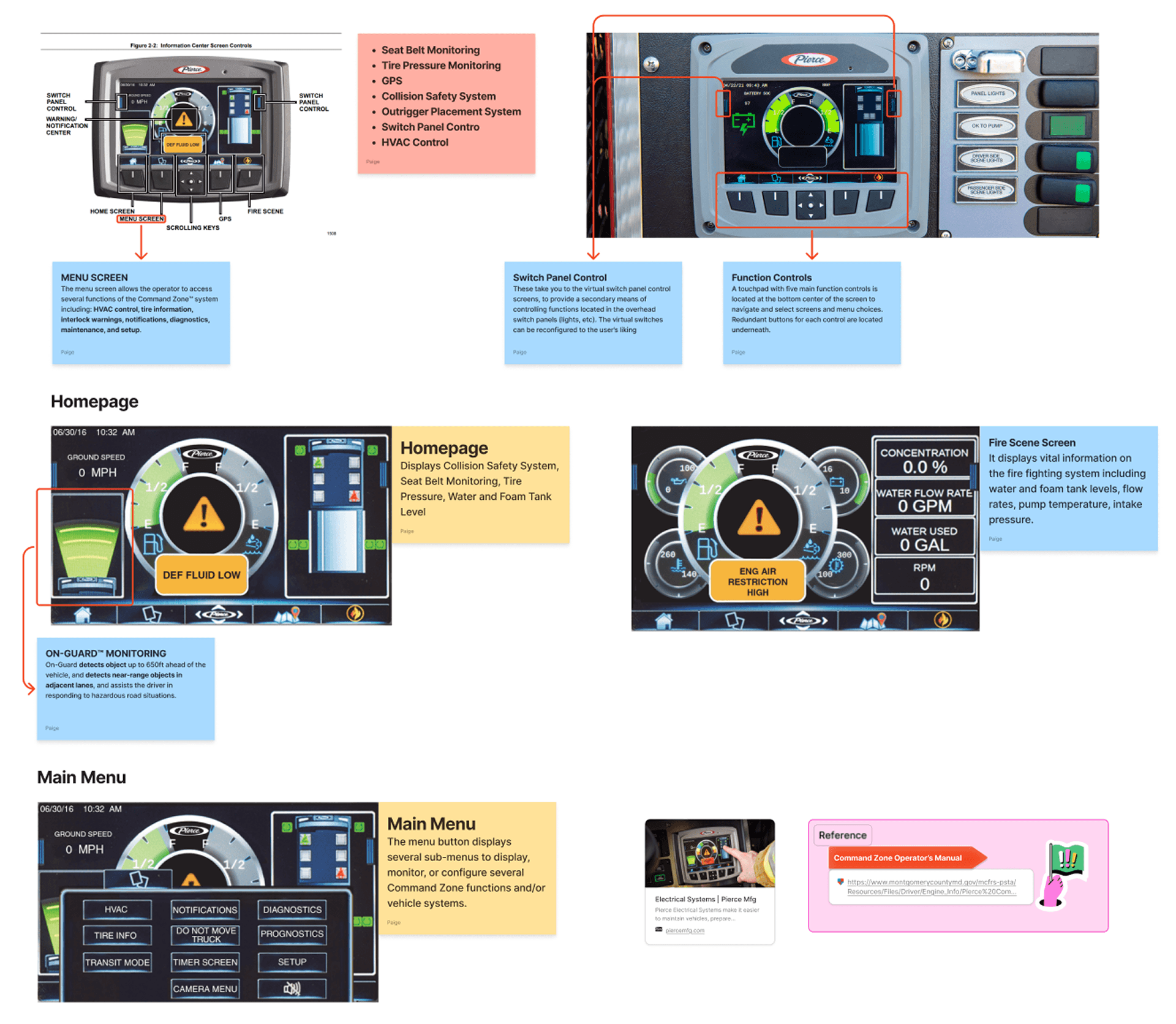
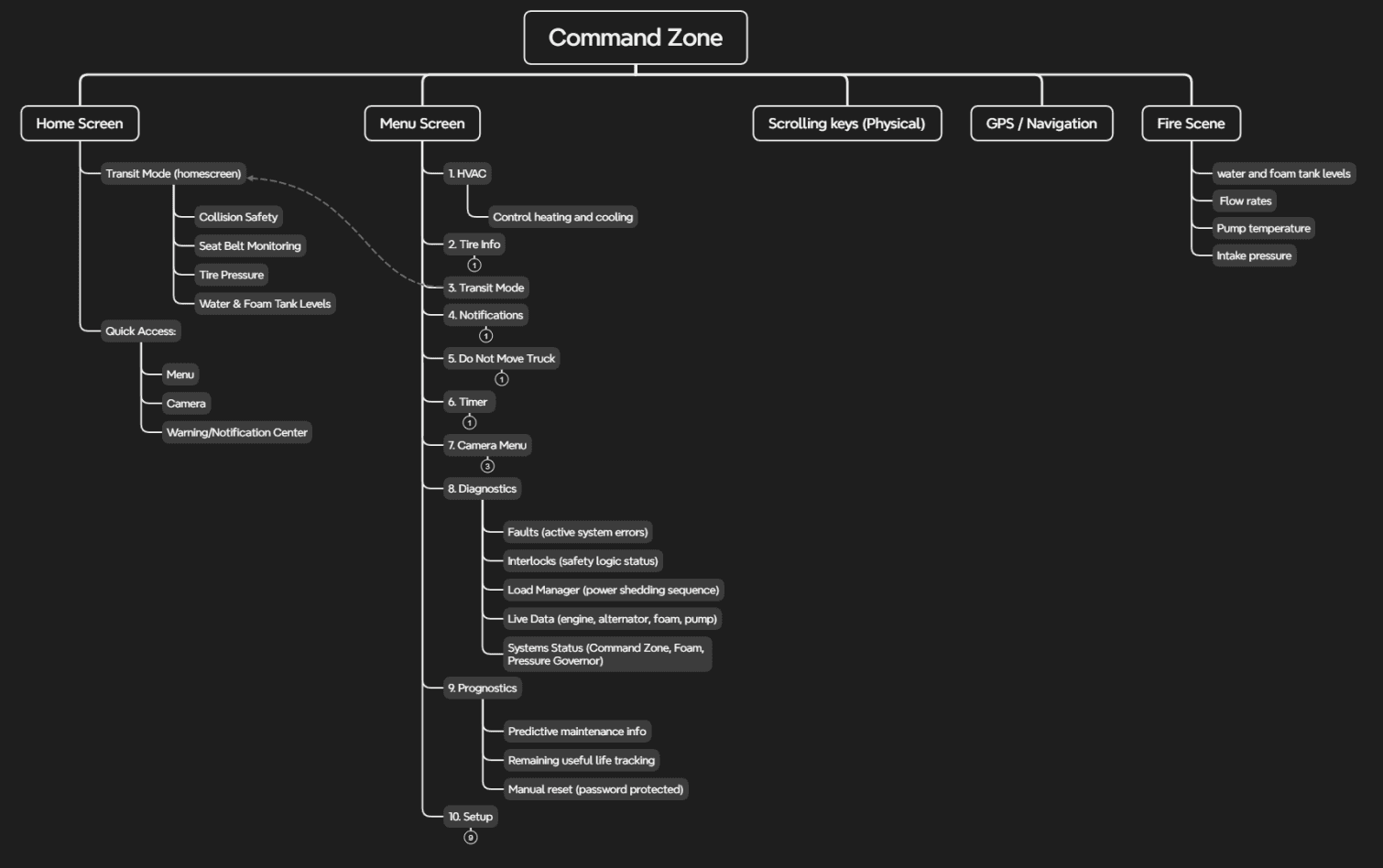
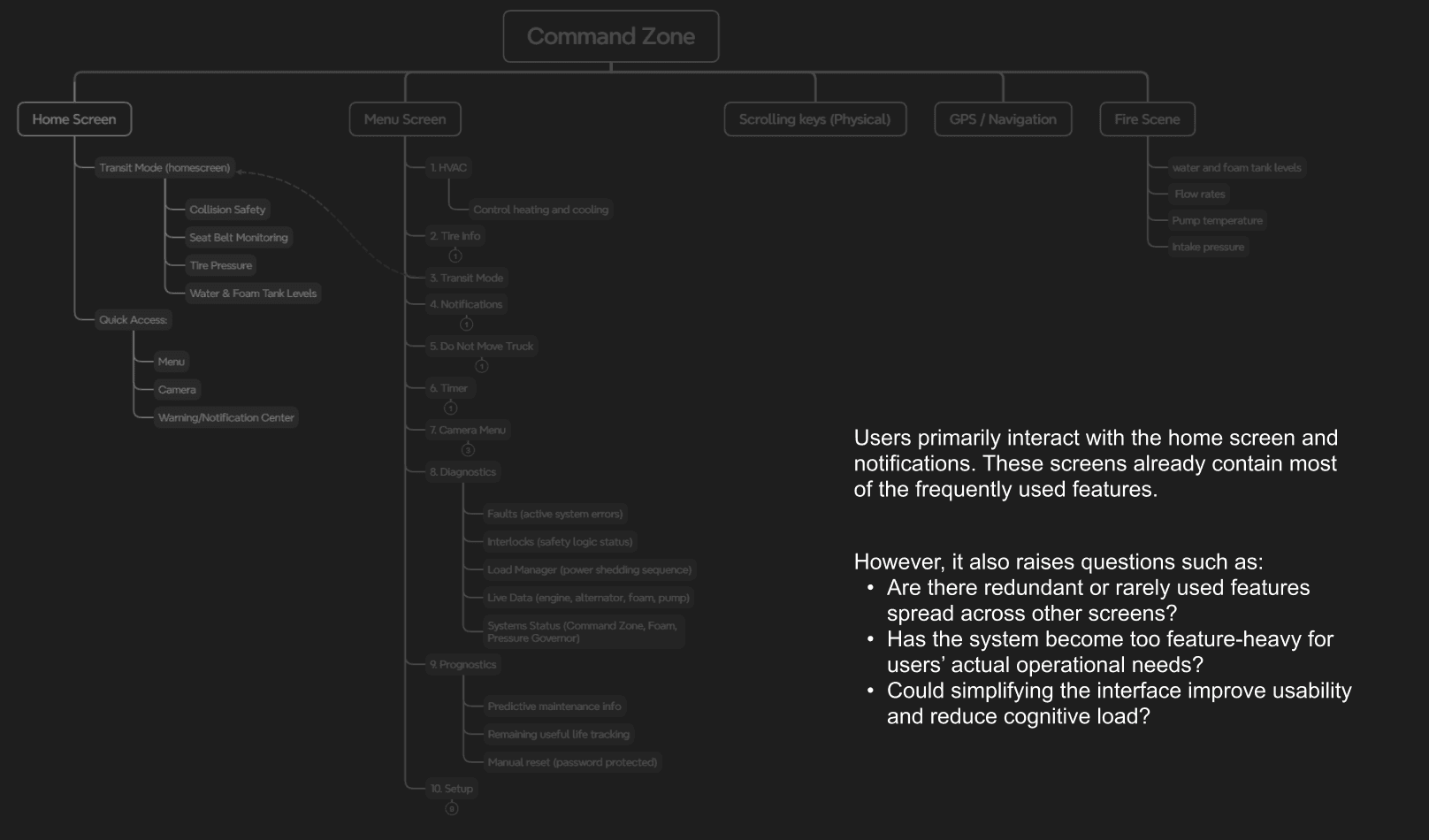
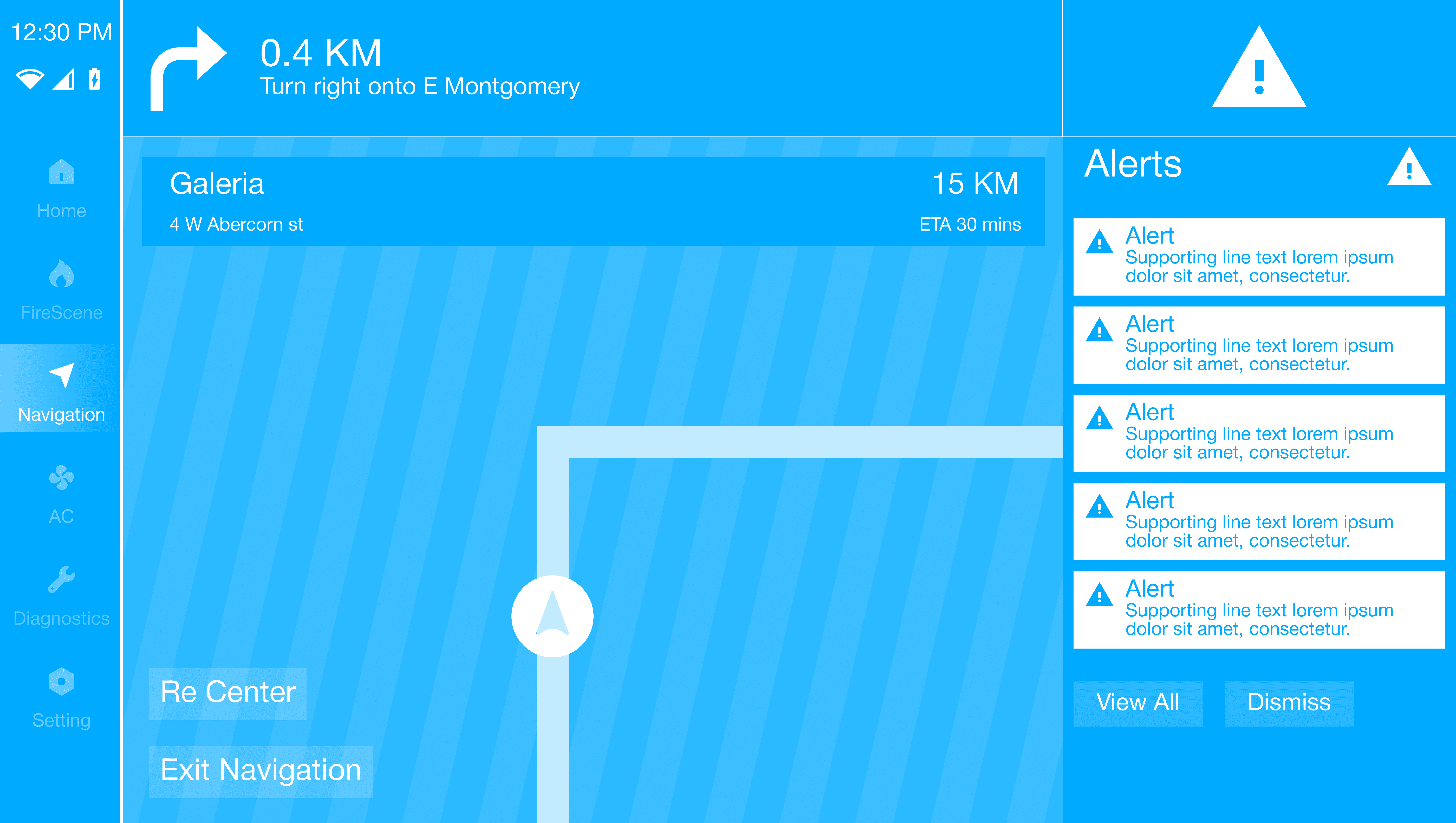
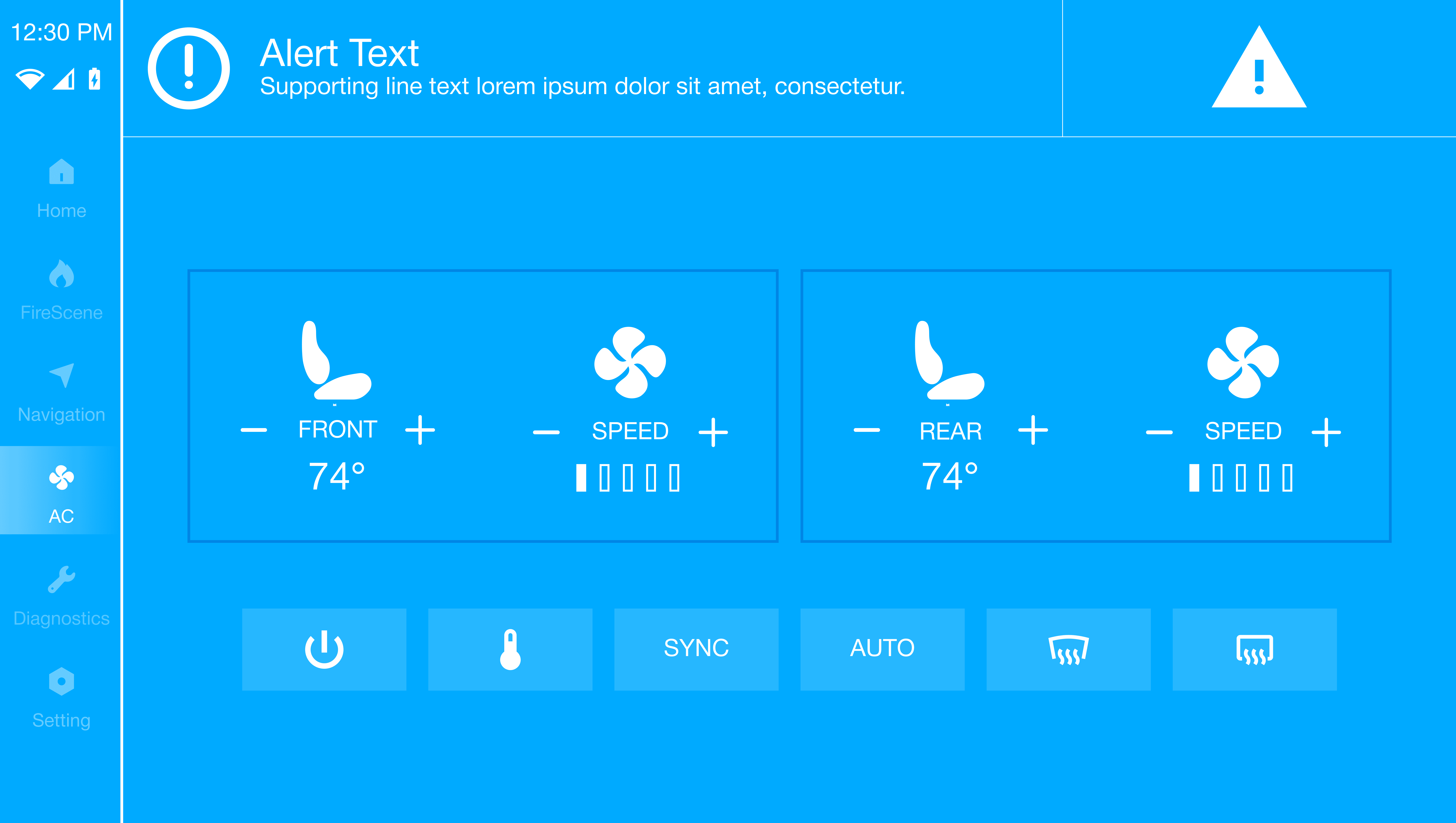
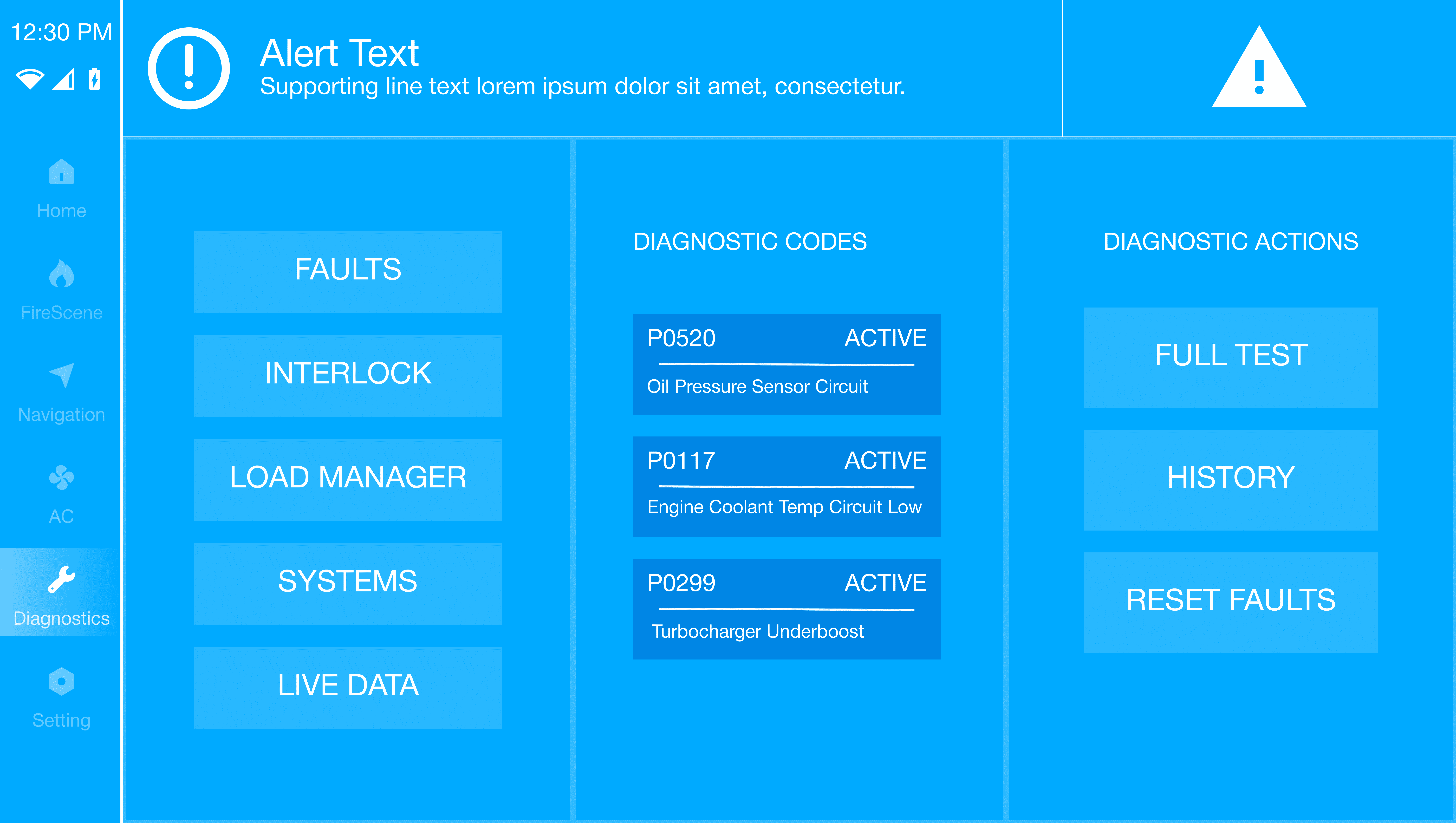
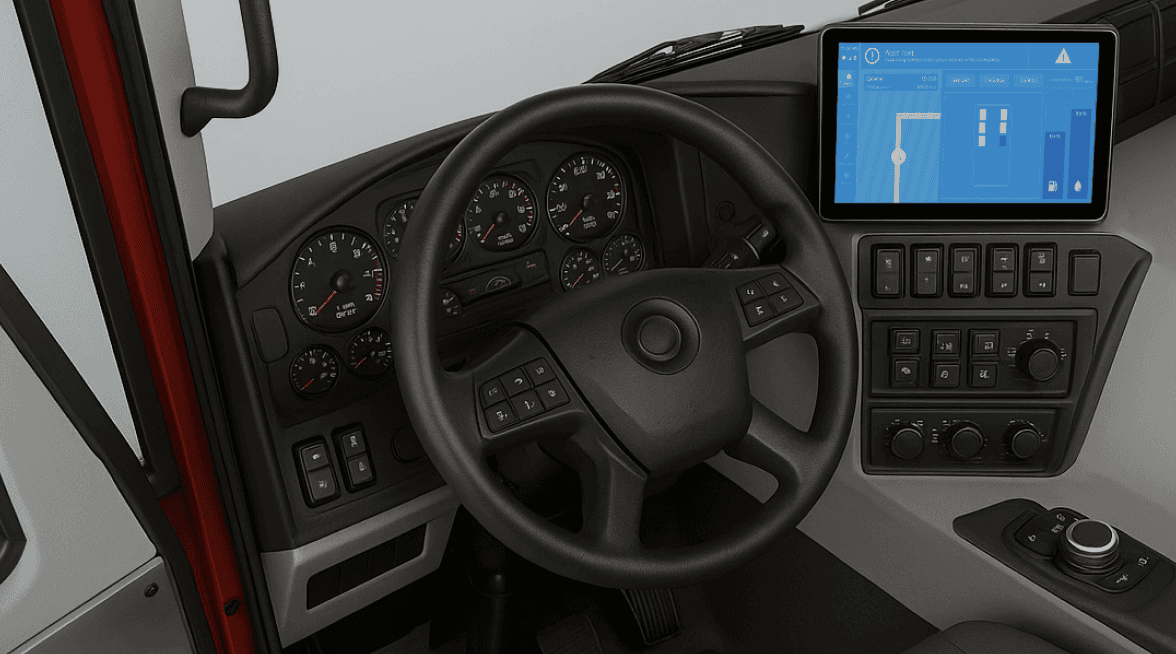
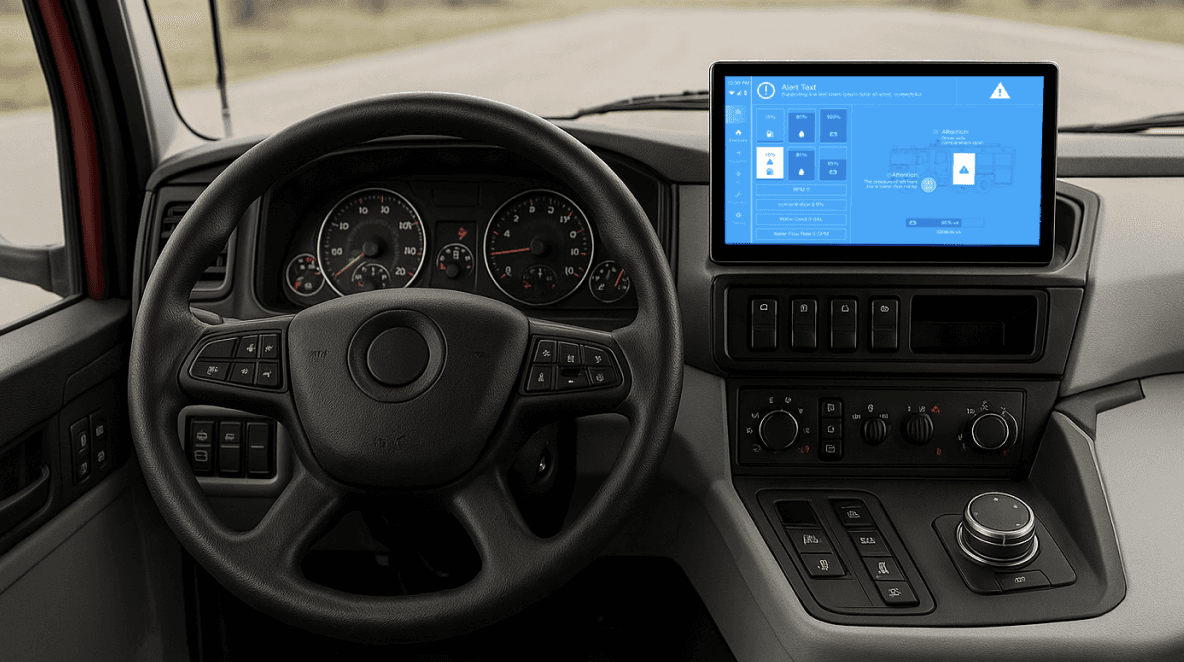
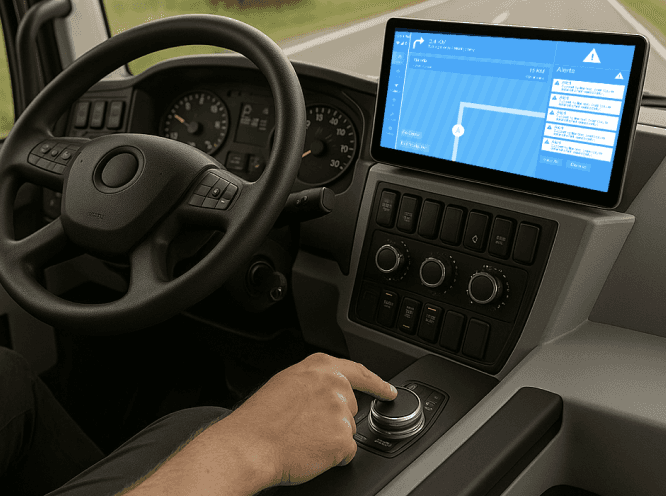
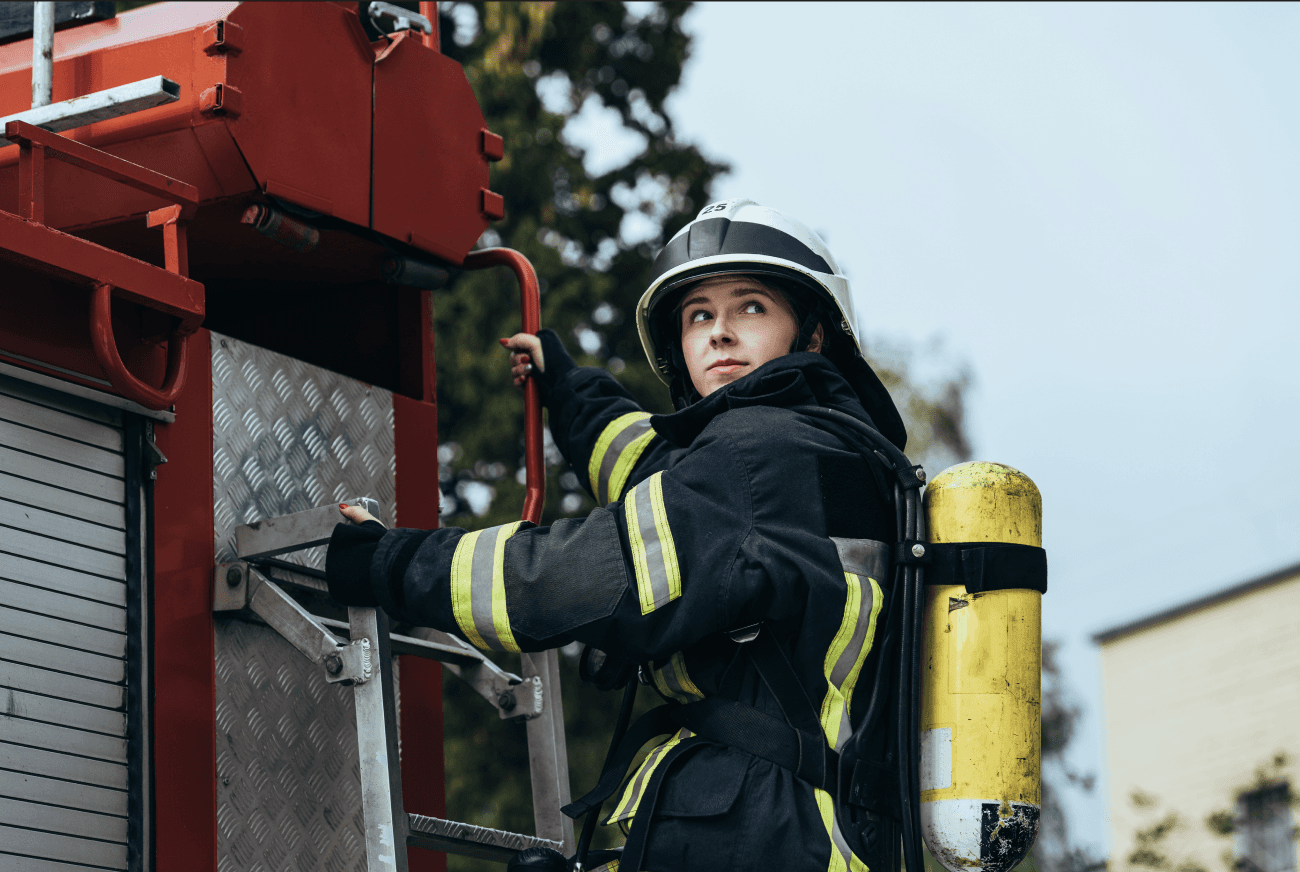
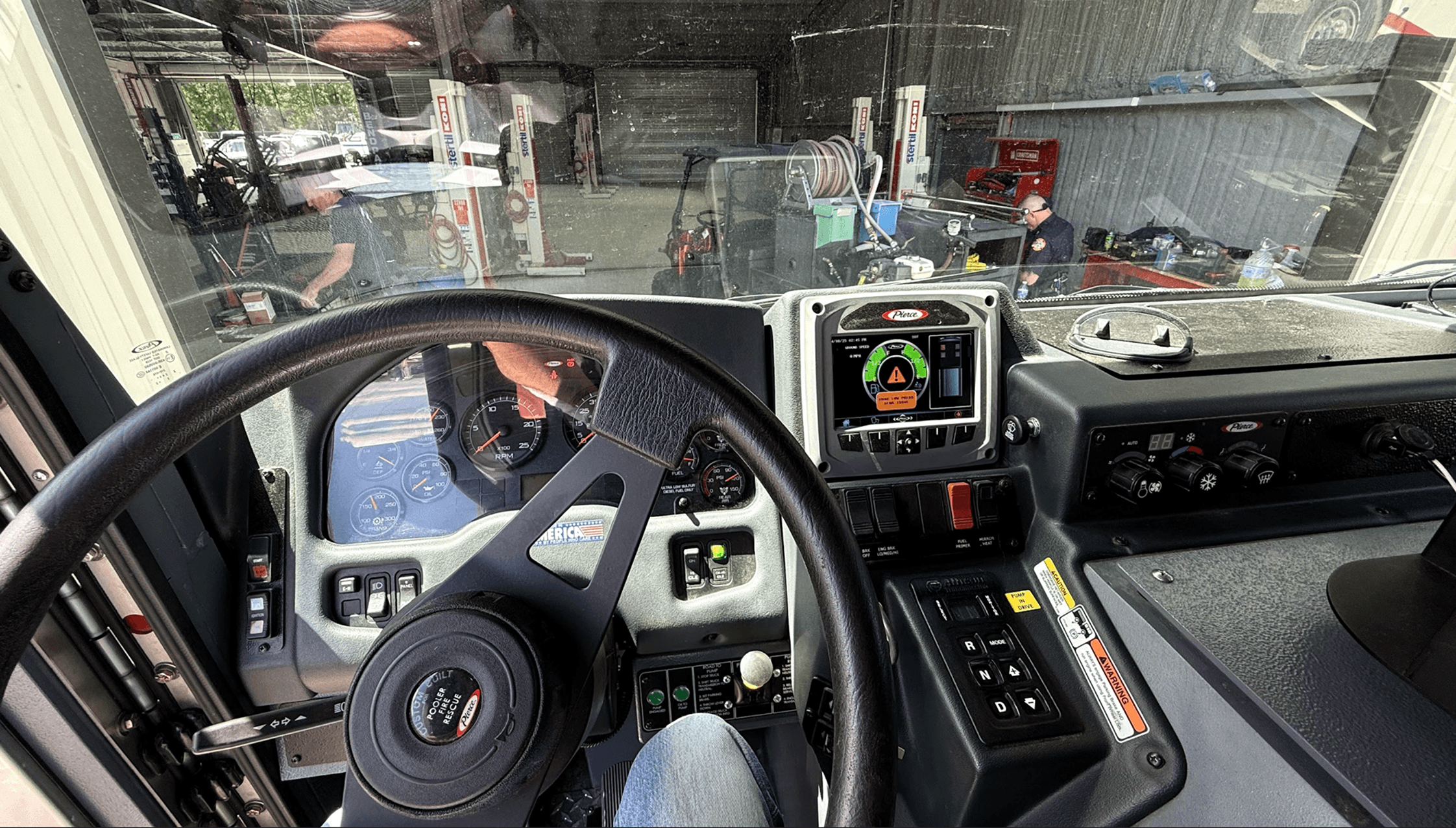
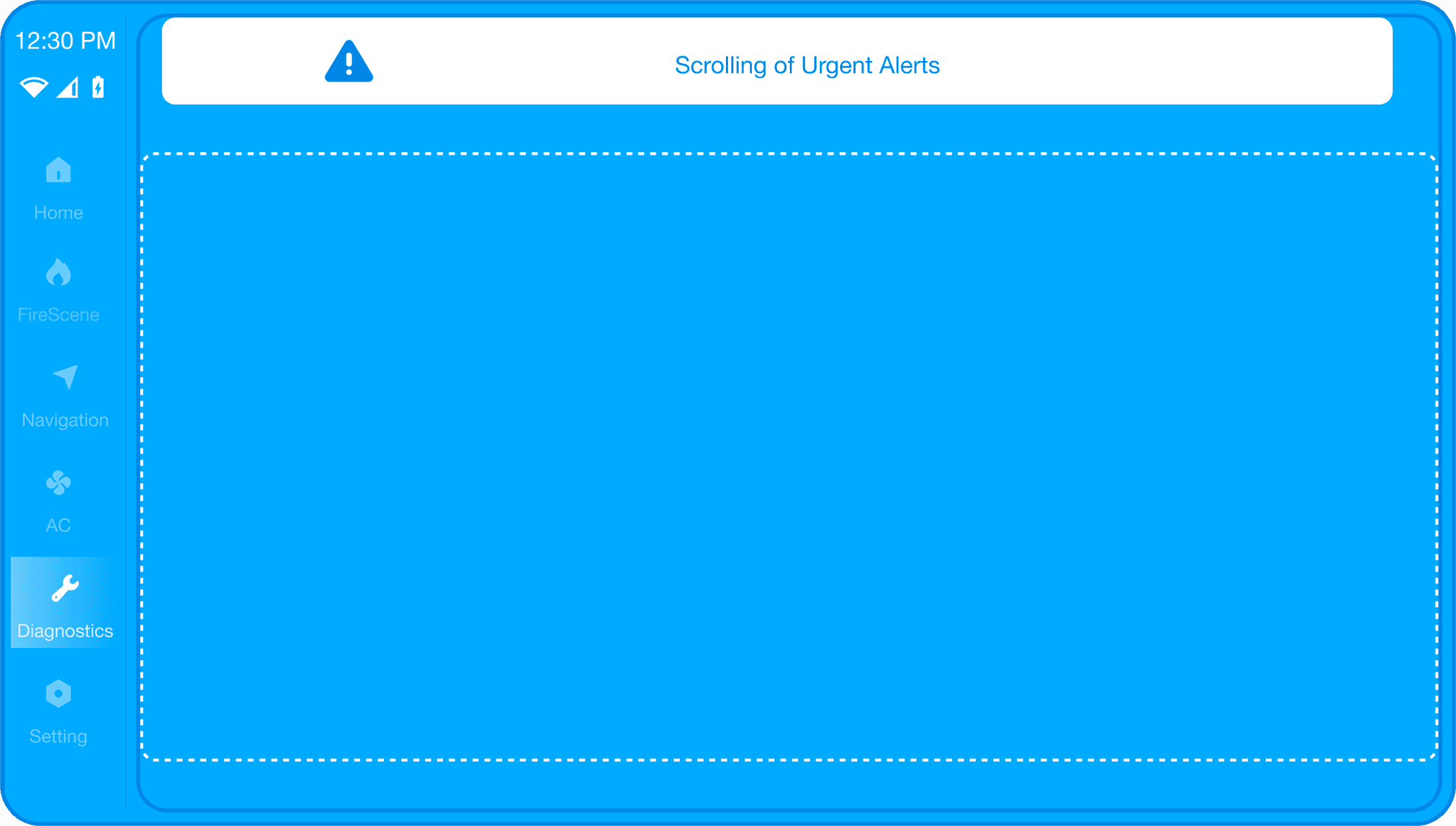
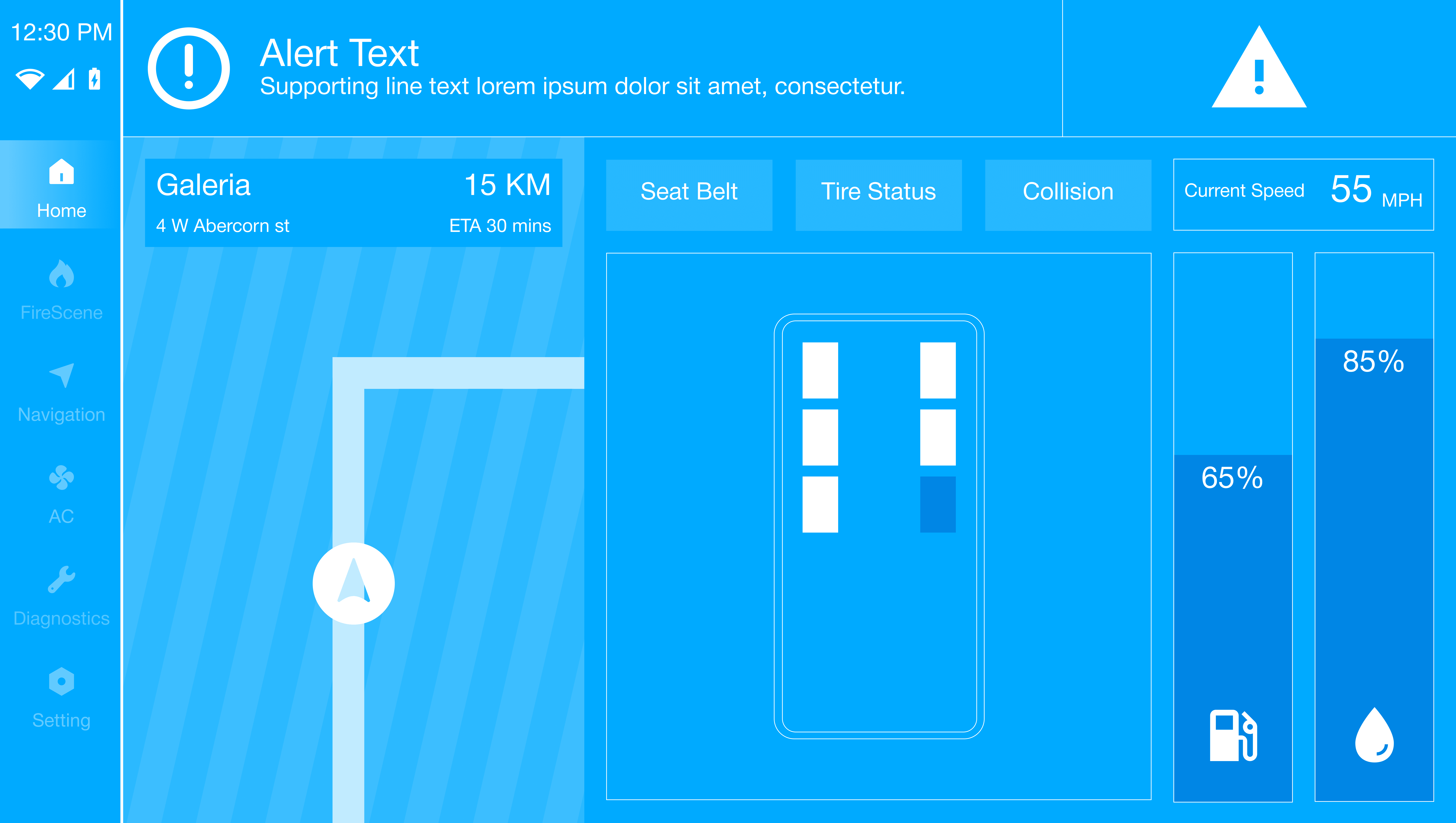
For the firetruck team, the project centered on improving how critical information is accessed during emergency response. The existing system relied on a single screen shared by firefighters and mechanics, displaying multiple layouts and functions while key data was split between the screen and the physical dashboard. This revealed an opportunity to reorganize the dash by introducing a second screen and refining interface hierarchy through wireframing and prototyping, creating a clearer, more intuitive system designed to support life-saving decisions while driving.


The Concrete Truck

For the concrete team, the project focused on improving control systems within harsh, material-heavy environments. Existing button-based interfaces are prone to becoming caked with cement over time, leading to reduced functionality and unreliable performance during operation. This revealed an opportunity to redesign the control layout, resulting in a physical joystick prototype with fewer buttons and greater customization to better adapt to individual driver needs and long-term job-site conditions.


The Delivery Truck

For the delivery team, the project focused on rethinking the user experience of a newly electrified truck platform. While the vehicle introduced advanced digital systems, the primary screen was positioned overhead near the ceiling, making it difficult for drivers to view while wearing standard uniform hats. This insight revealed an opportunity to improve usability by reconfiguring screen placement and refining surrounding interface elements. Through these adjustments, the design enhances visibility, reduces distraction, and better supports drivers during daily delivery operations.


The Firetruck

For the firetruck team, the project centered on improving how critical information is accessed during emergency response. The existing system relied on a single screen shared by firefighters and mechanics, displaying multiple layouts and functions while key data was split between the screen and the physical dashboard. This revealed an opportunity to reorganize the dash by introducing a second screen and refining interface hierarchy through wireframing and prototyping, creating a clearer, more intuitive system designed to support life-saving decisions while driving.


The Concrete Truck

For the concrete team, the project focused on improving control systems within harsh, material-heavy environments. Existing button-based interfaces are prone to becoming caked with cement over time, leading to reduced functionality and unreliable performance during operation. This revealed an opportunity to redesign the control layout, resulting in a physical joystick prototype with fewer buttons and greater customization to better adapt to individual driver needs and long-term job-site conditions.


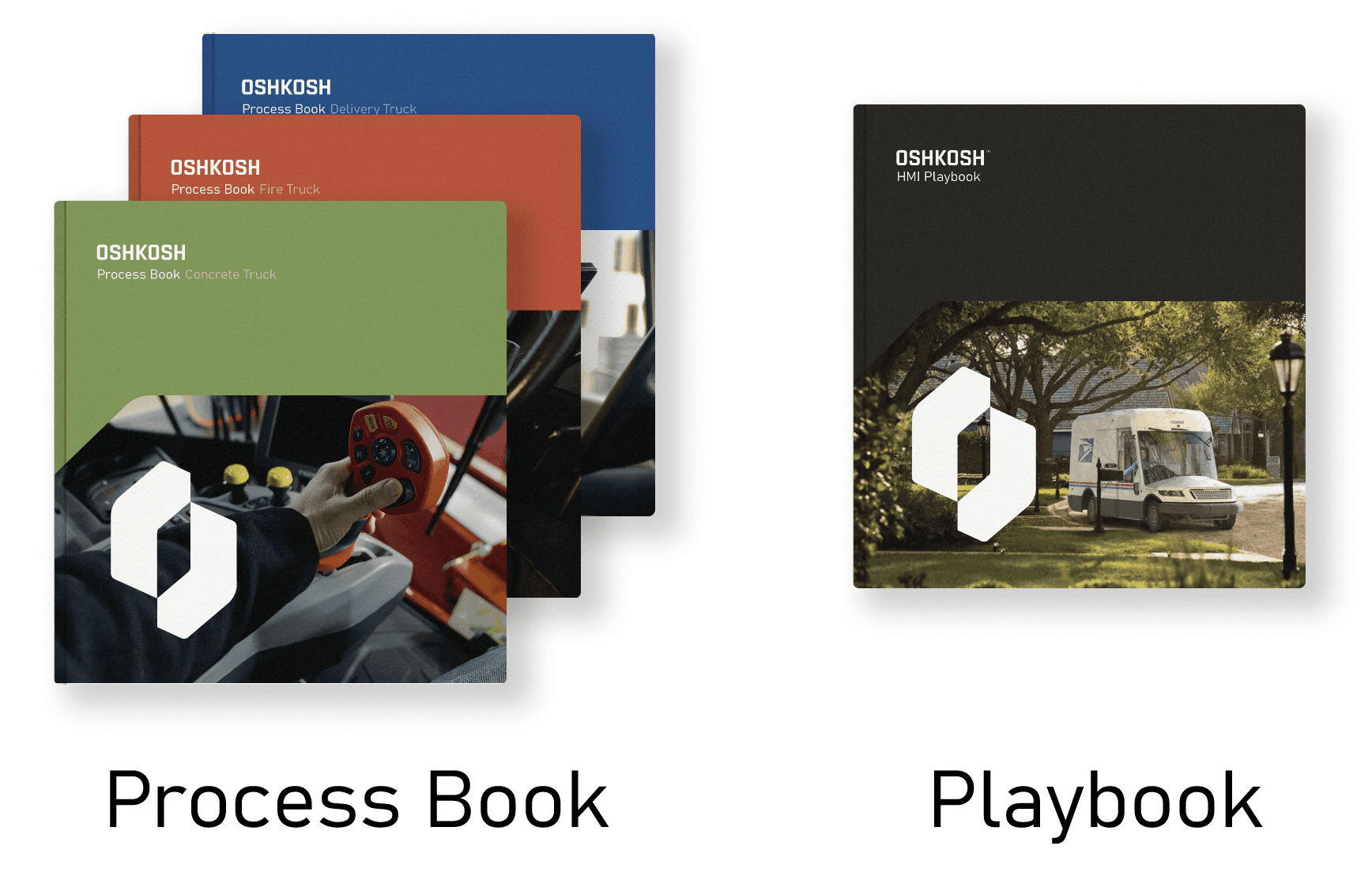
The Process Book

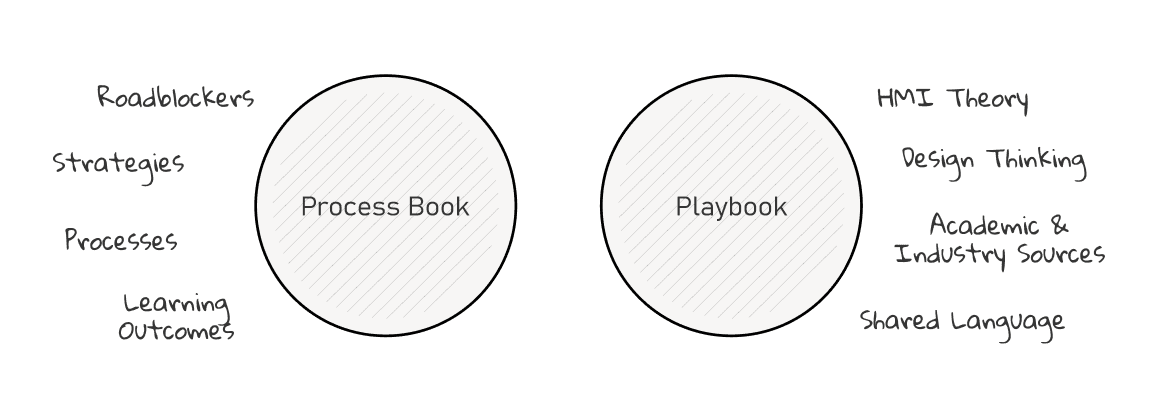
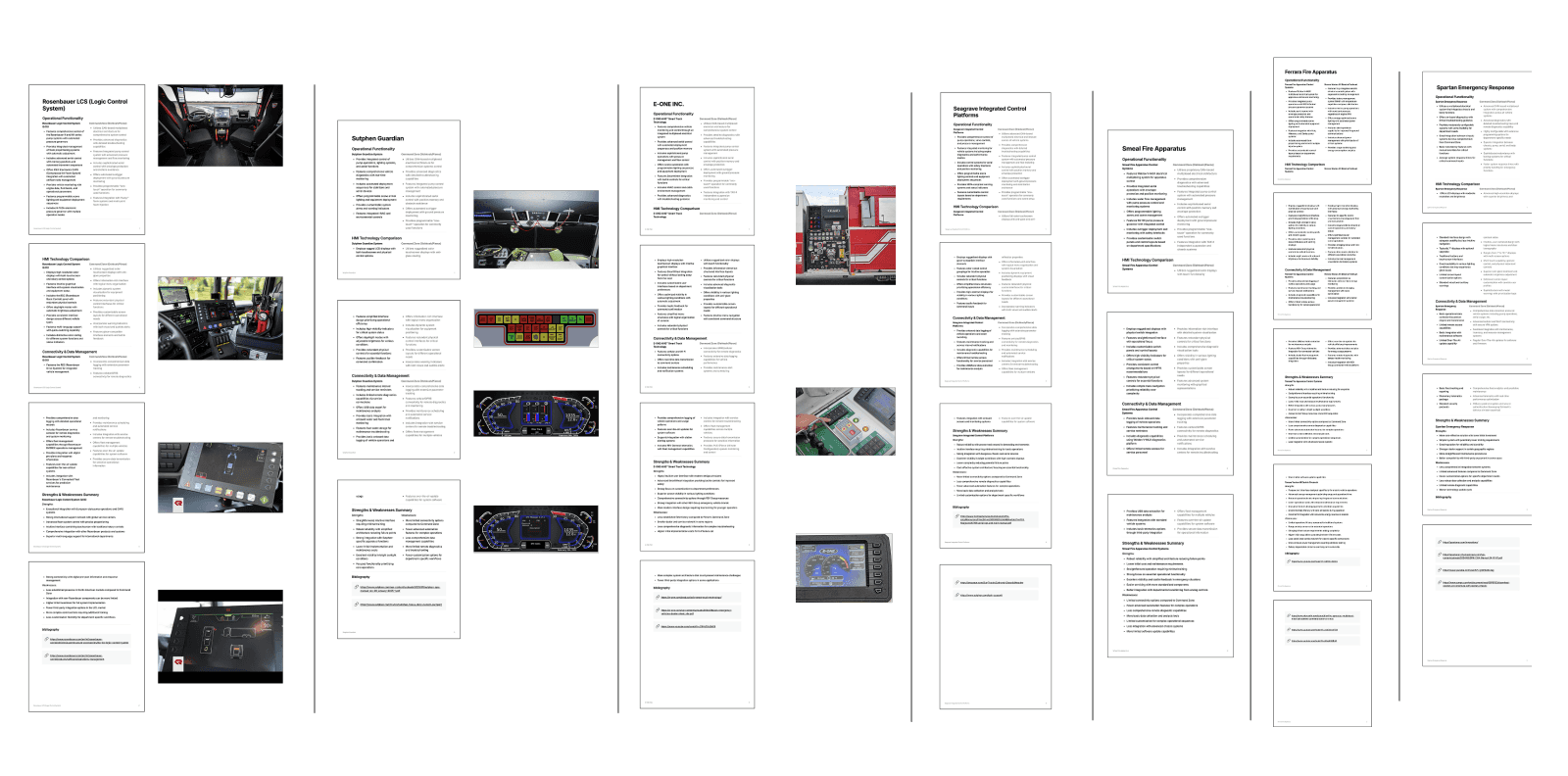
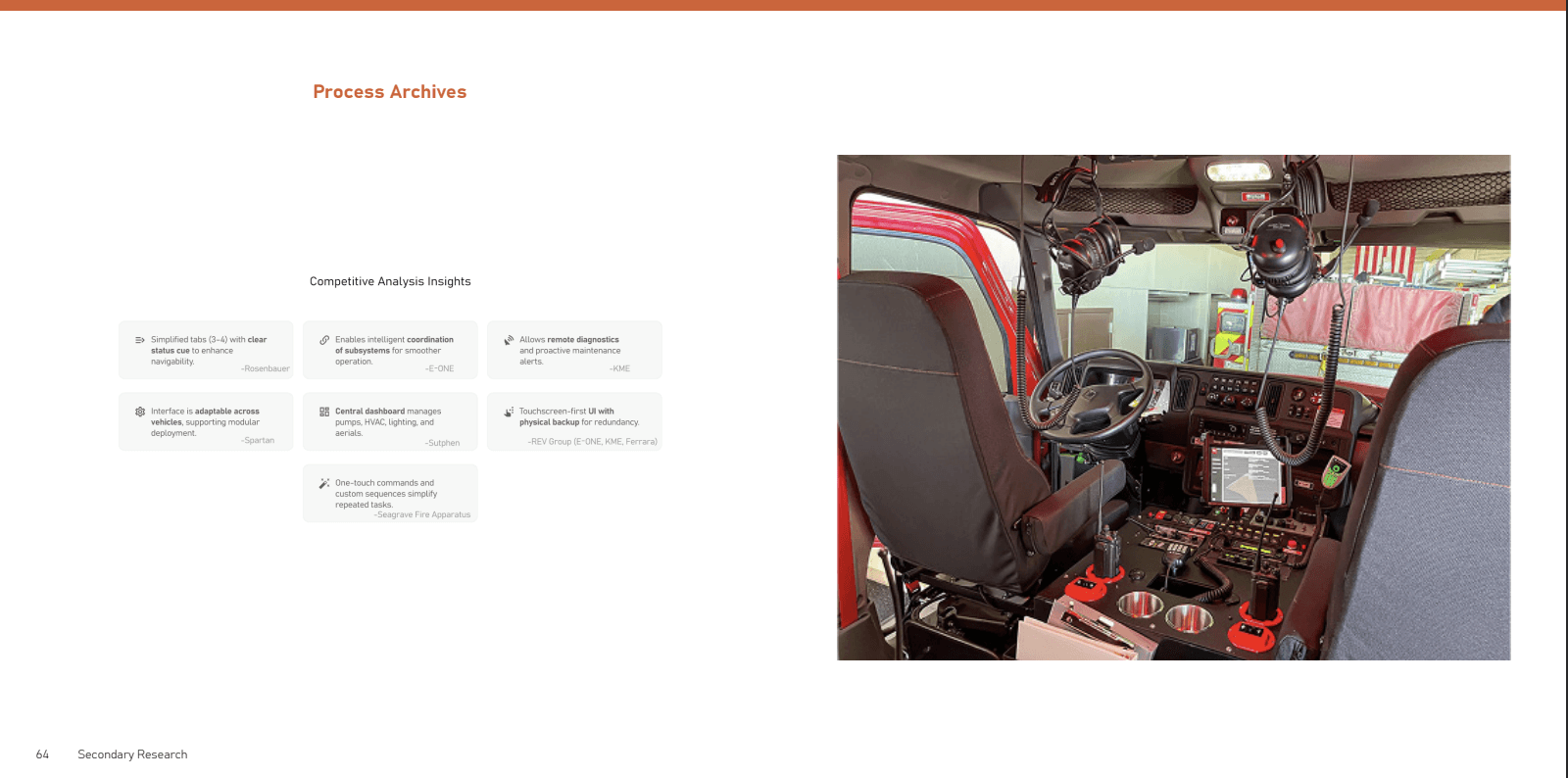
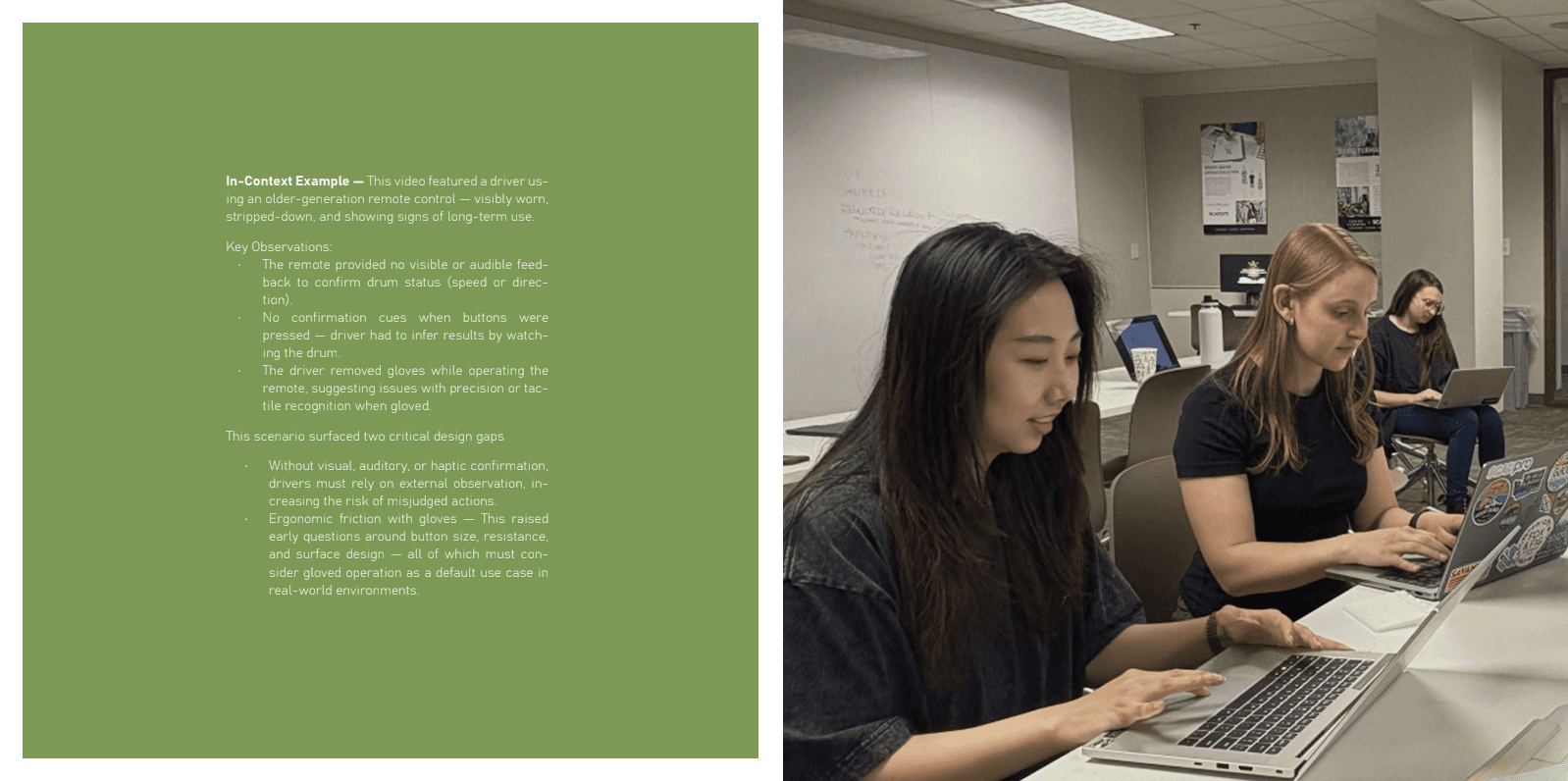
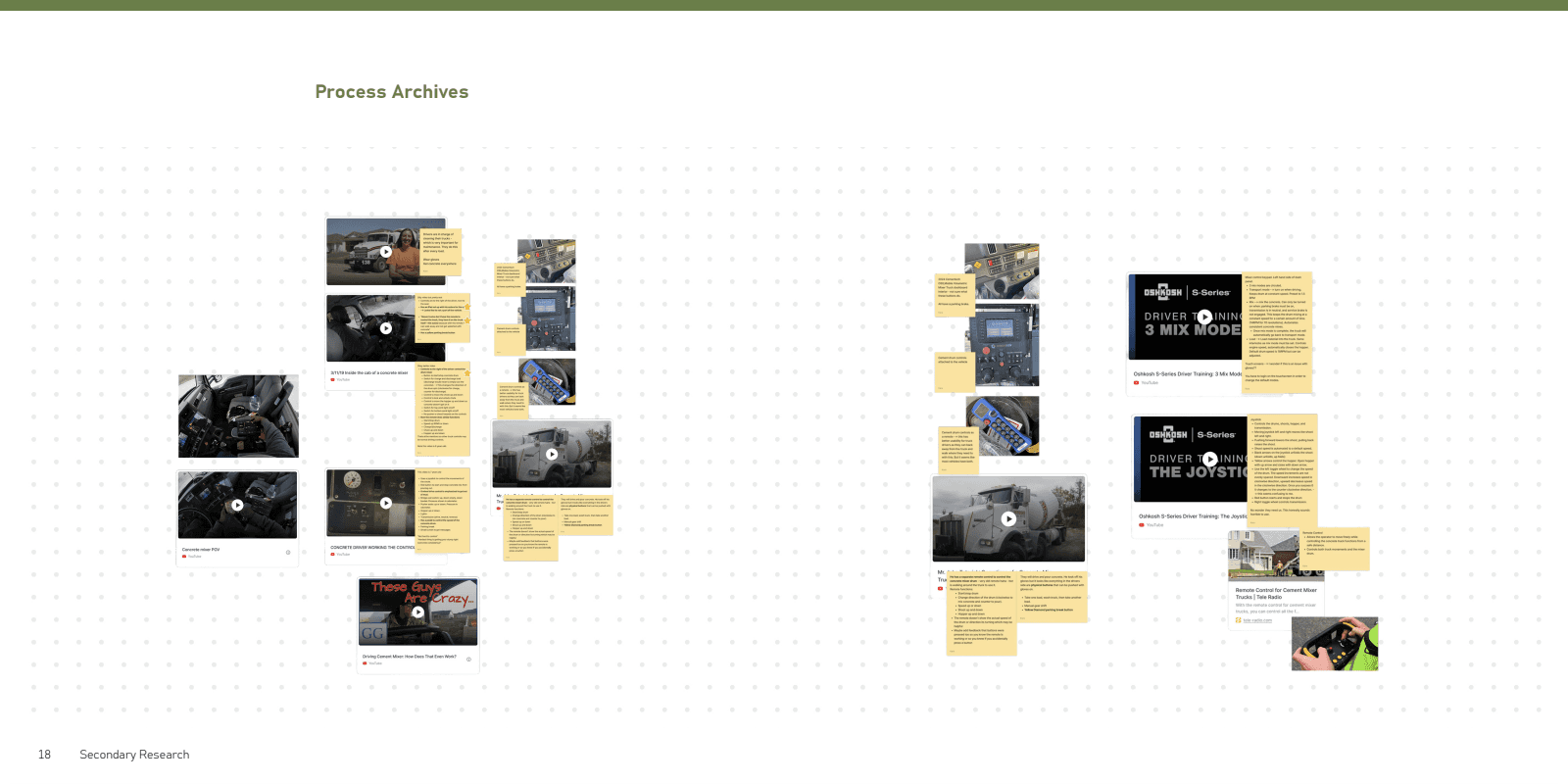
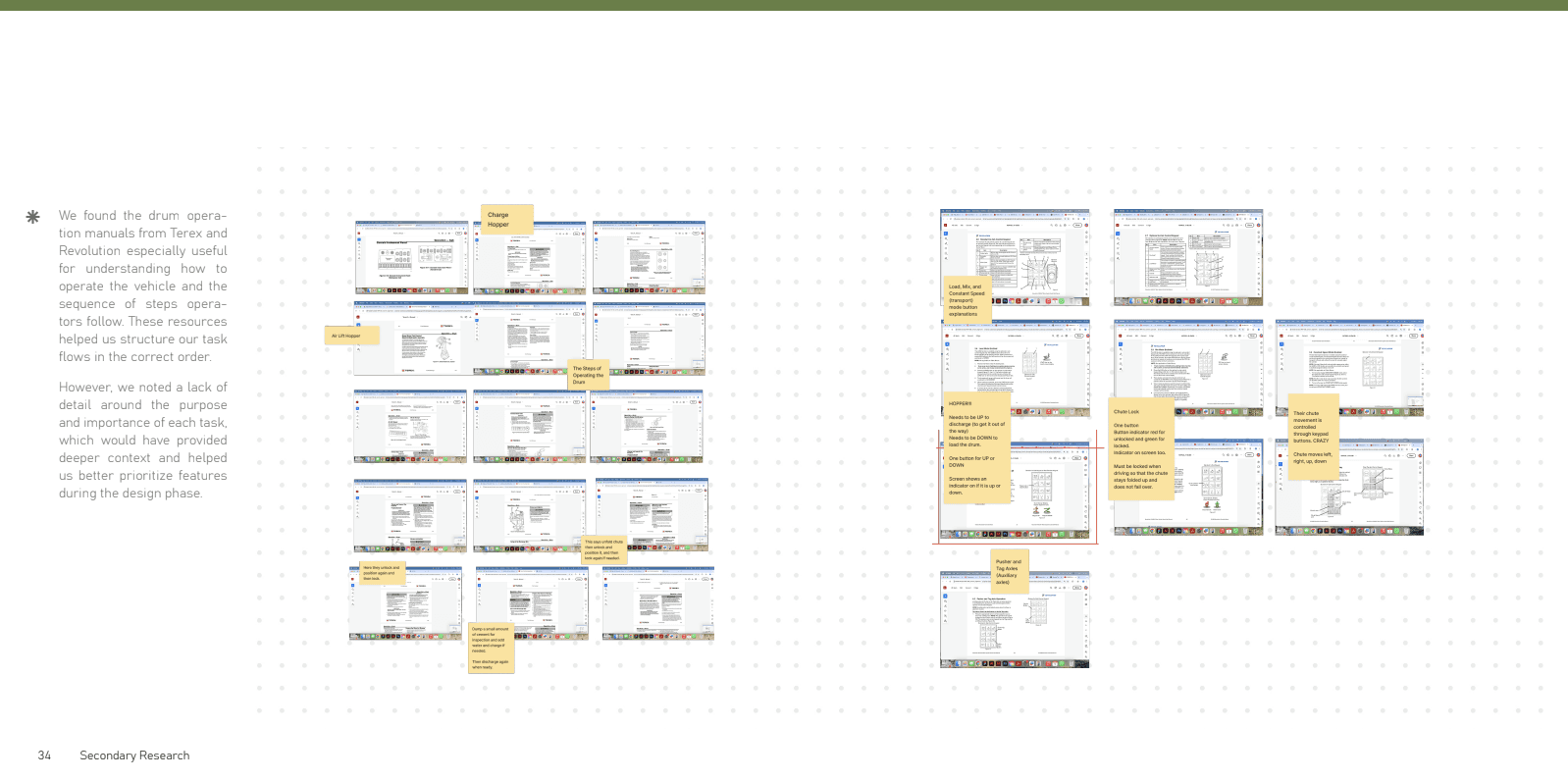
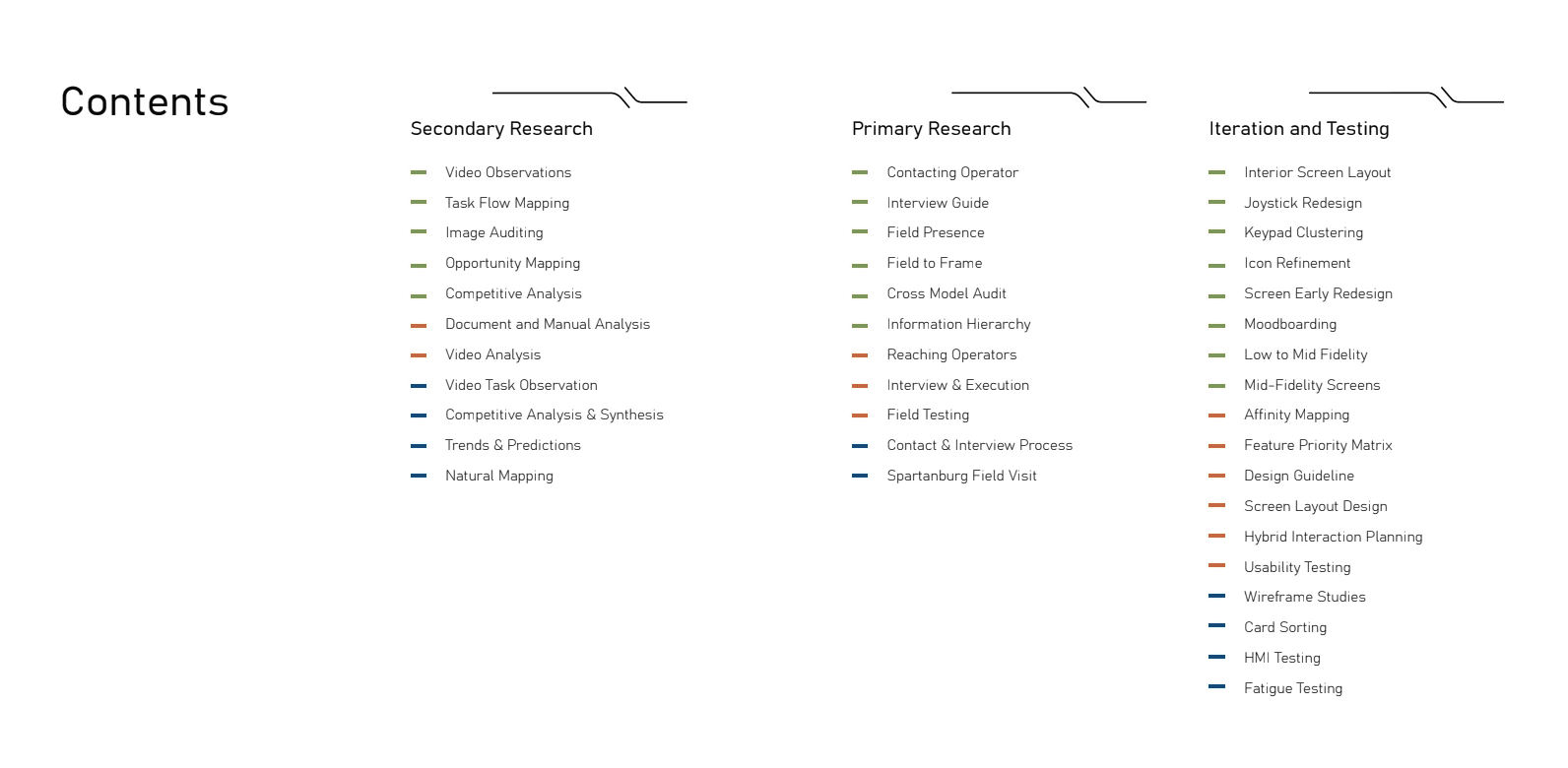
The Process Book served as a living record of our design journey. It captured roadblocks, evolving strategies, workflow decisions, and learning outcomes as they happened in real time. As students, this space allowed us to test ideas freely, document failures without consequence, and reflect on what did not work just as much as what did. By continuously updating the Process Book, we were able to track our growth, understand why certain directions were abandoned, and use those insights to inform stronger design decisions moving forward.

The Playbook

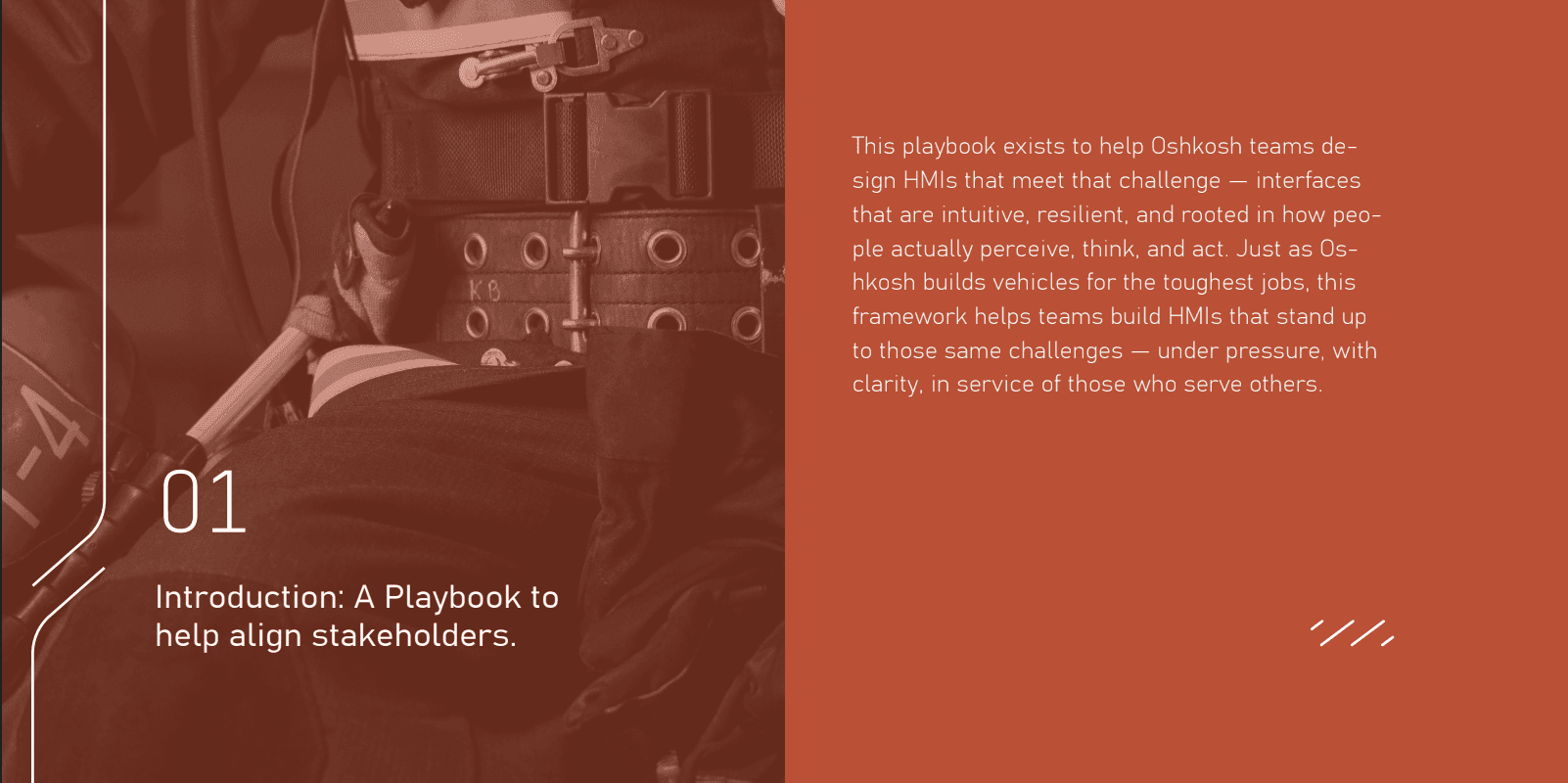
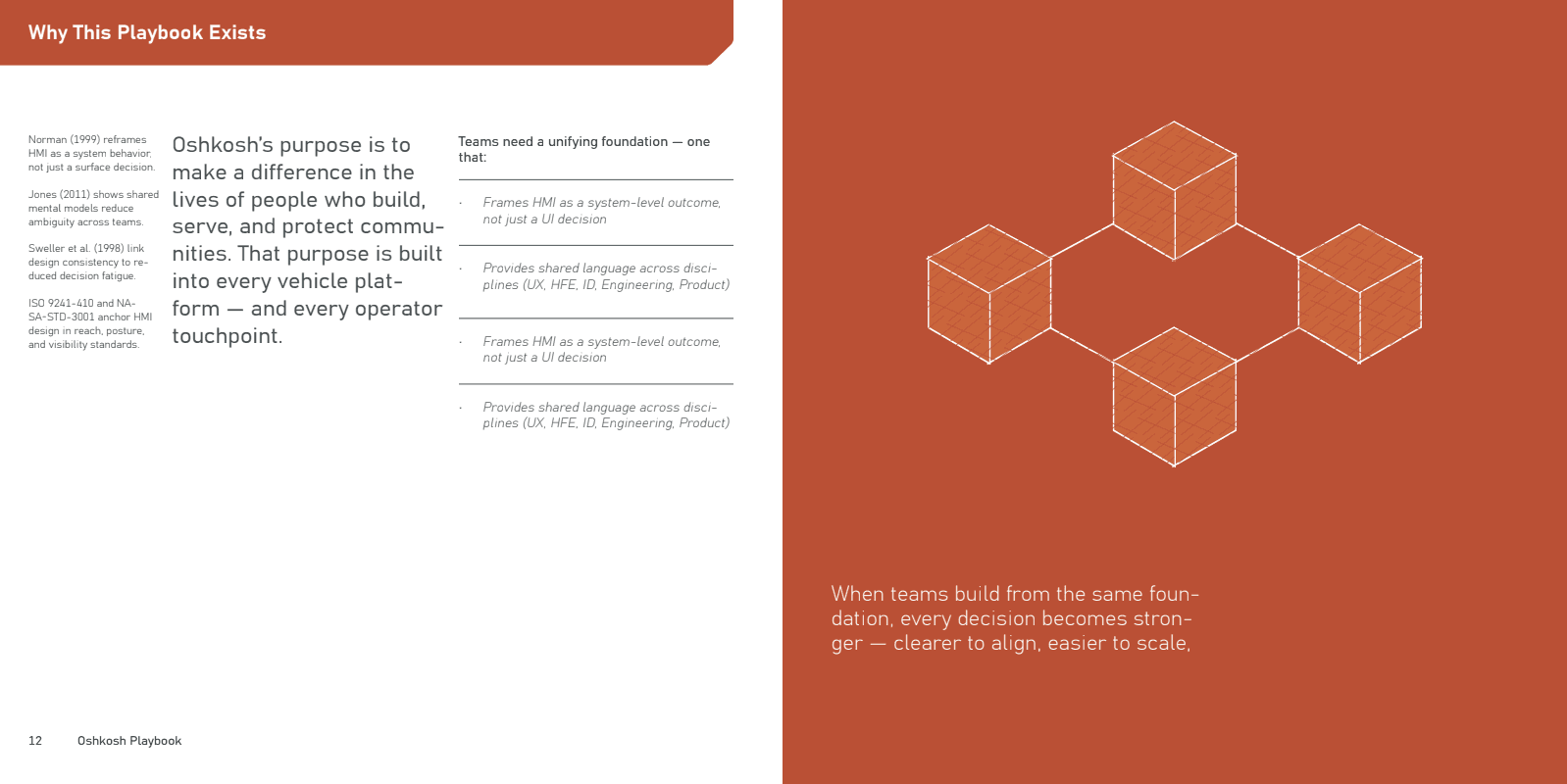
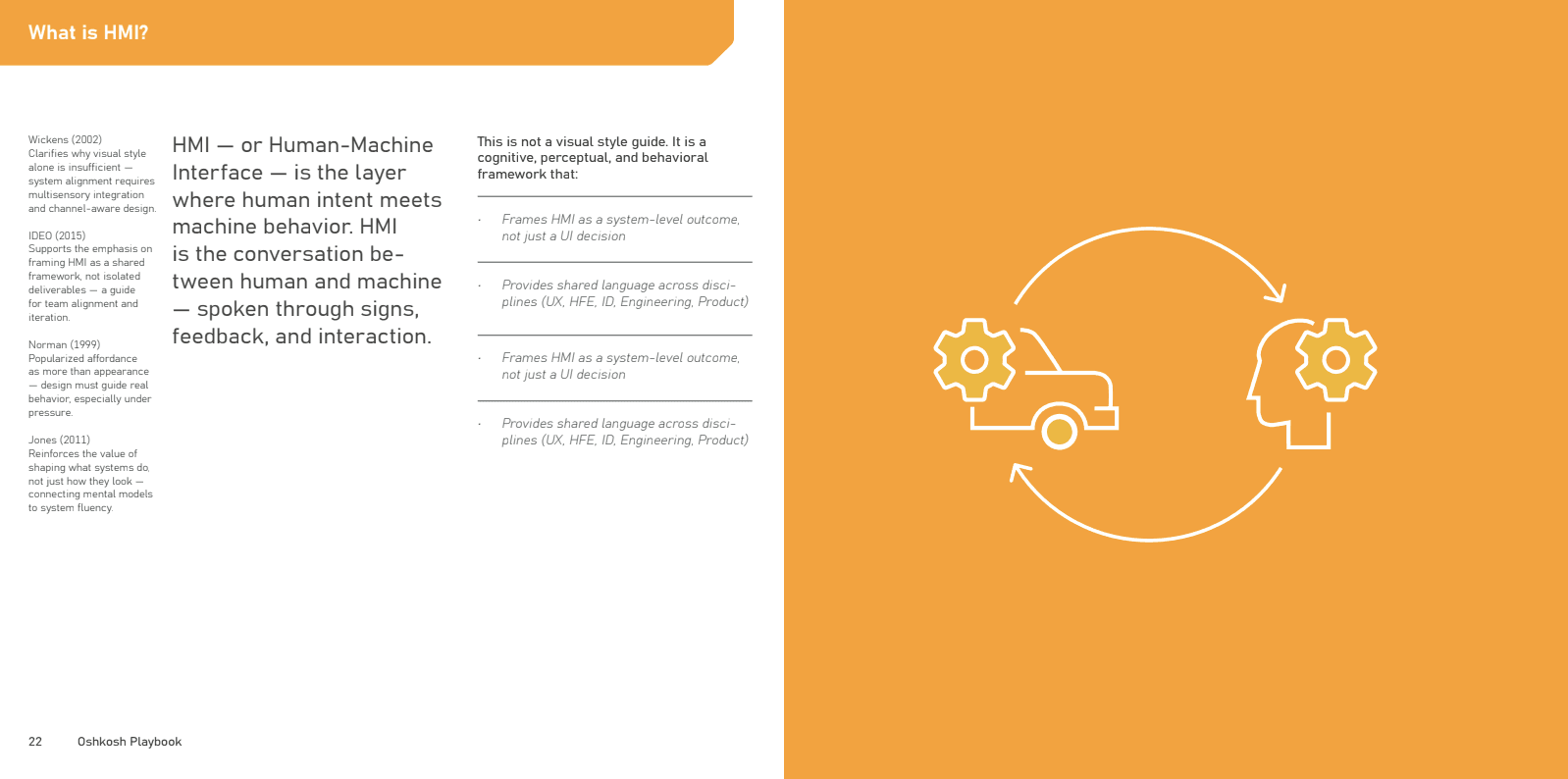
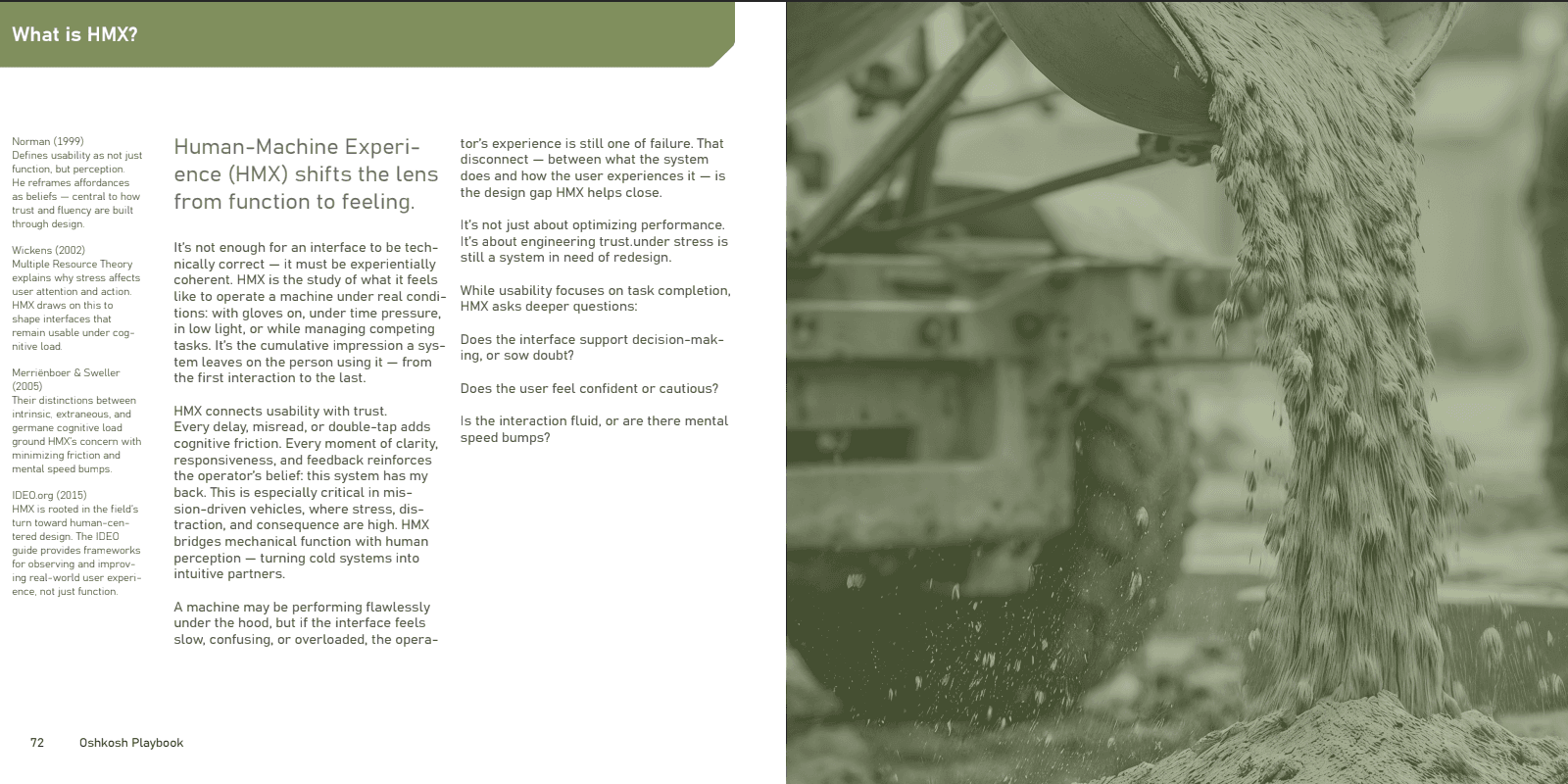
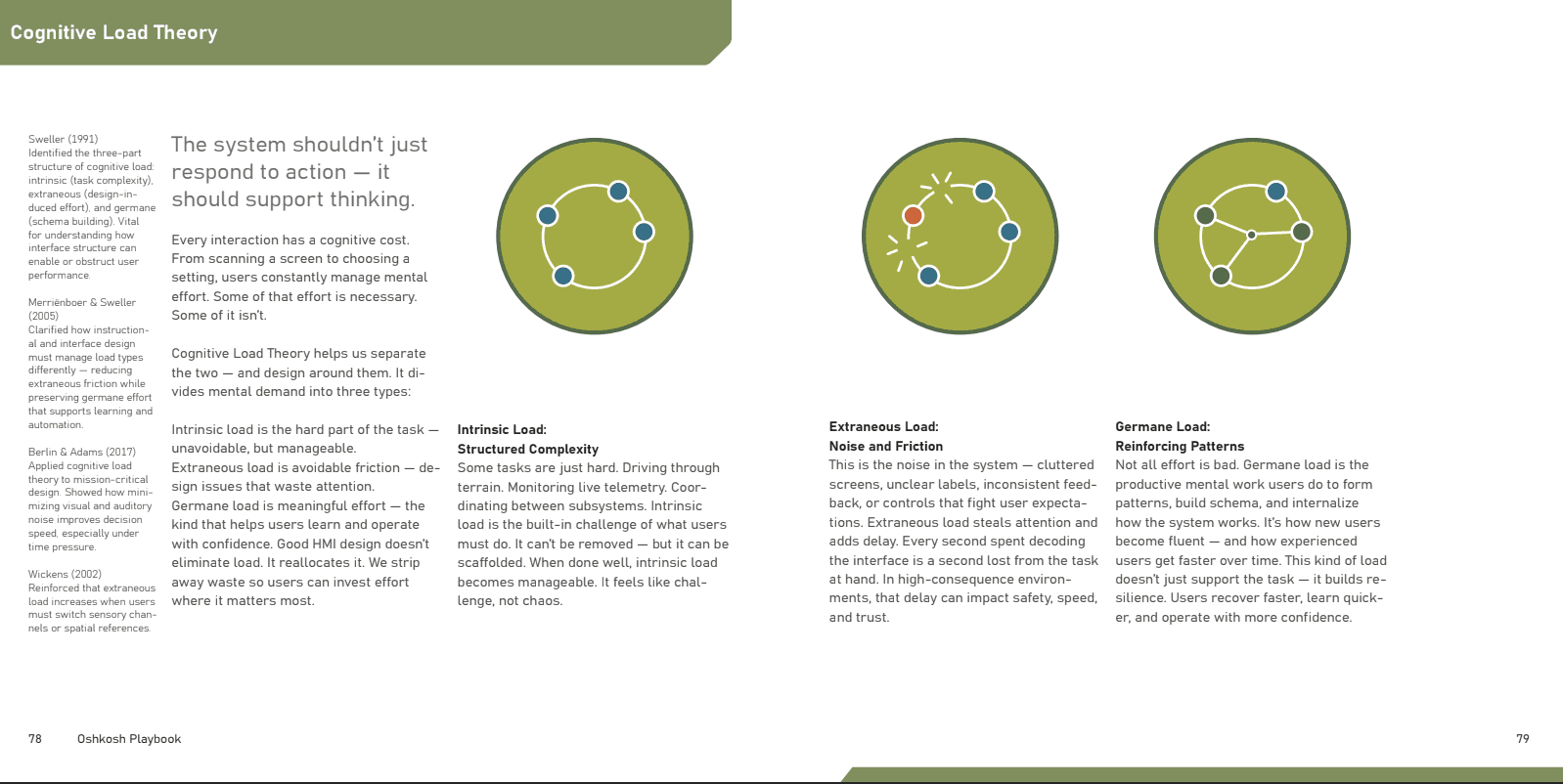
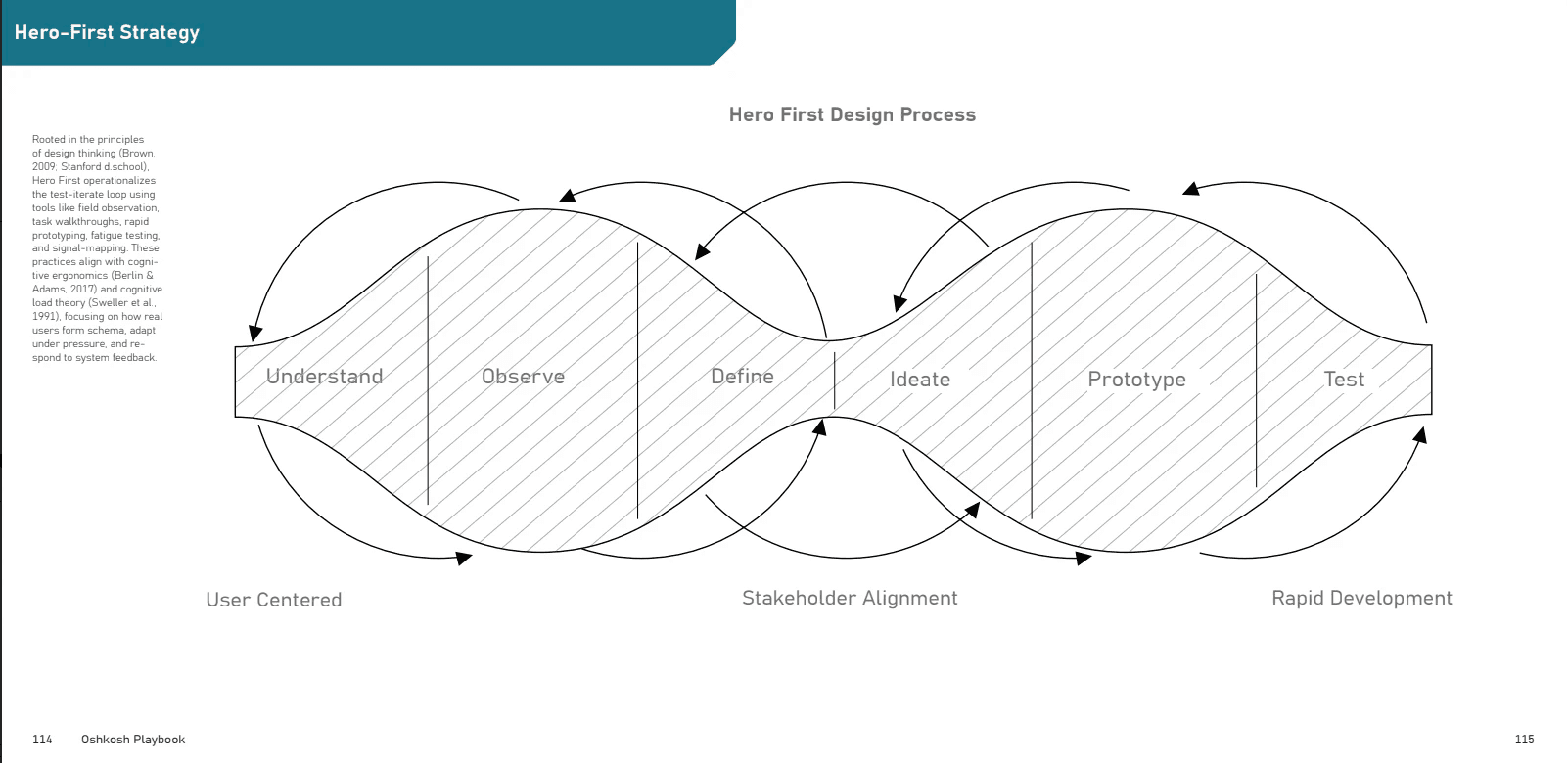
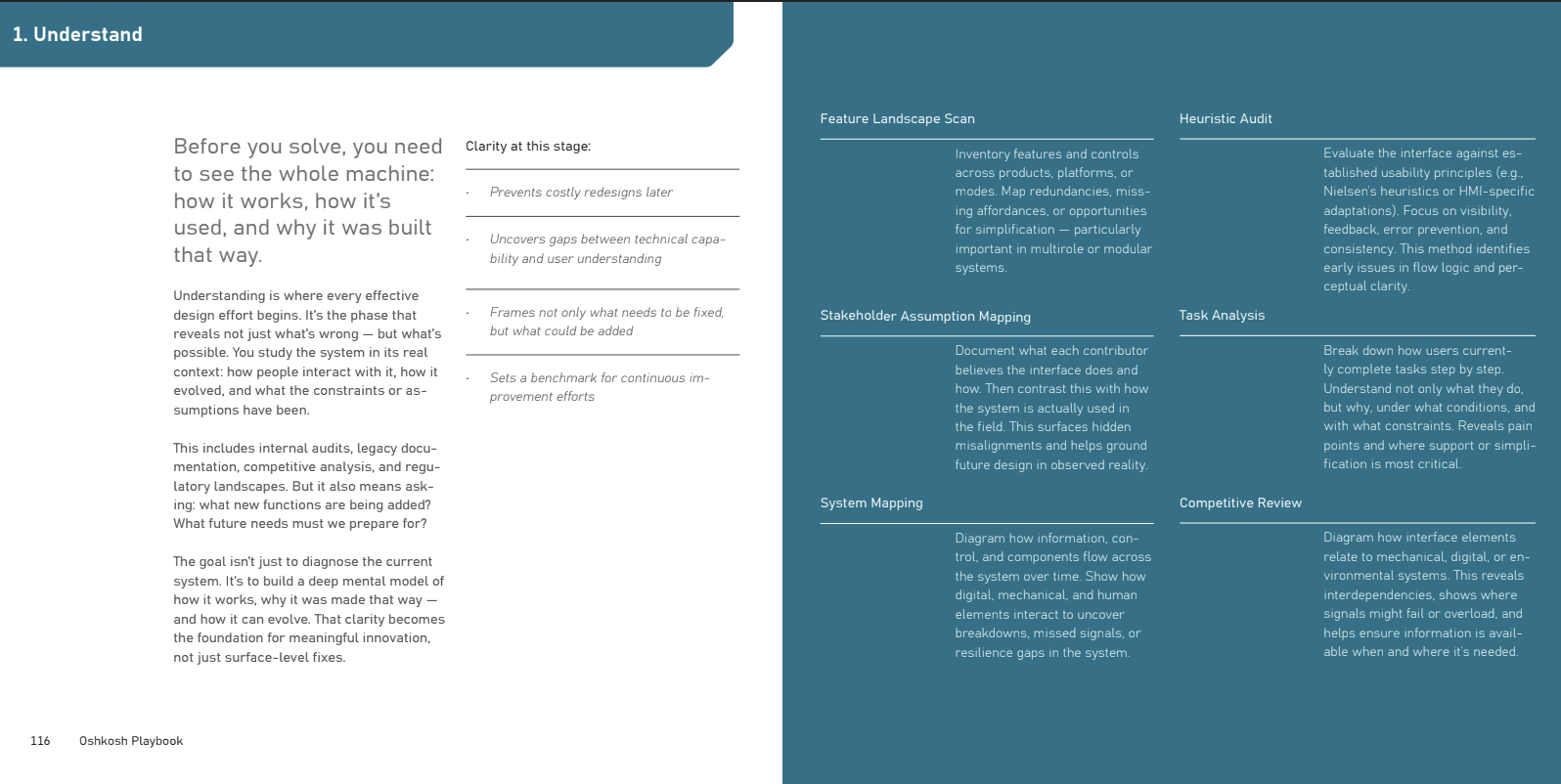
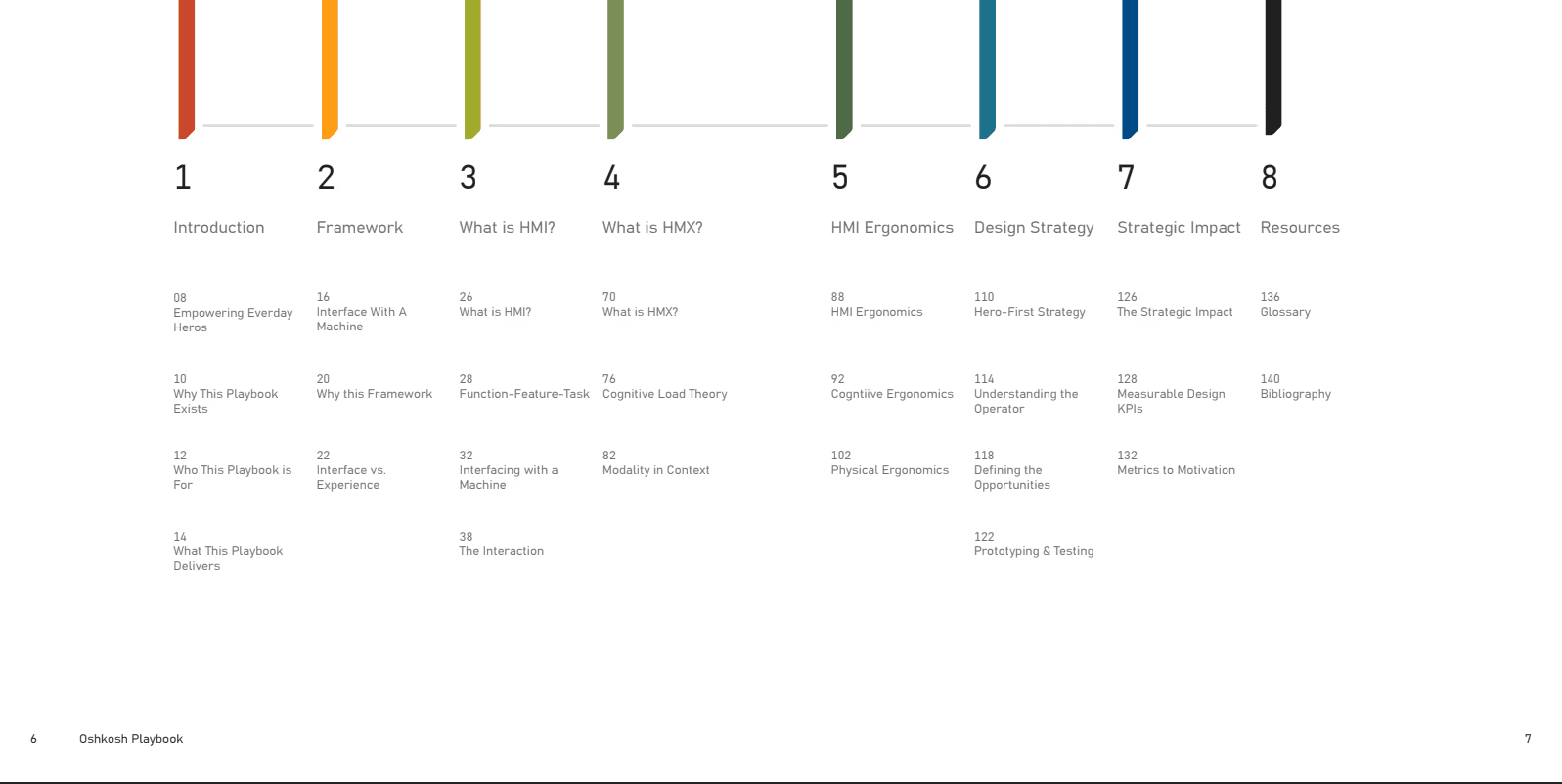
The Playbook translated our findings into a refined, actionable framework. Grounded in HMI theory, design thinking, and both academic and industry research, it became a shared language that aligned our teams. Rather than documenting experiments, the Playbook distilled what we learned from repeated testing and iteration into clear principles, guidelines, and best practices. This allowed us to apply our lessons consistently across teams and vehicle types, turning trial-and-error learning into a structured approach for future design challenges.

Primary Research

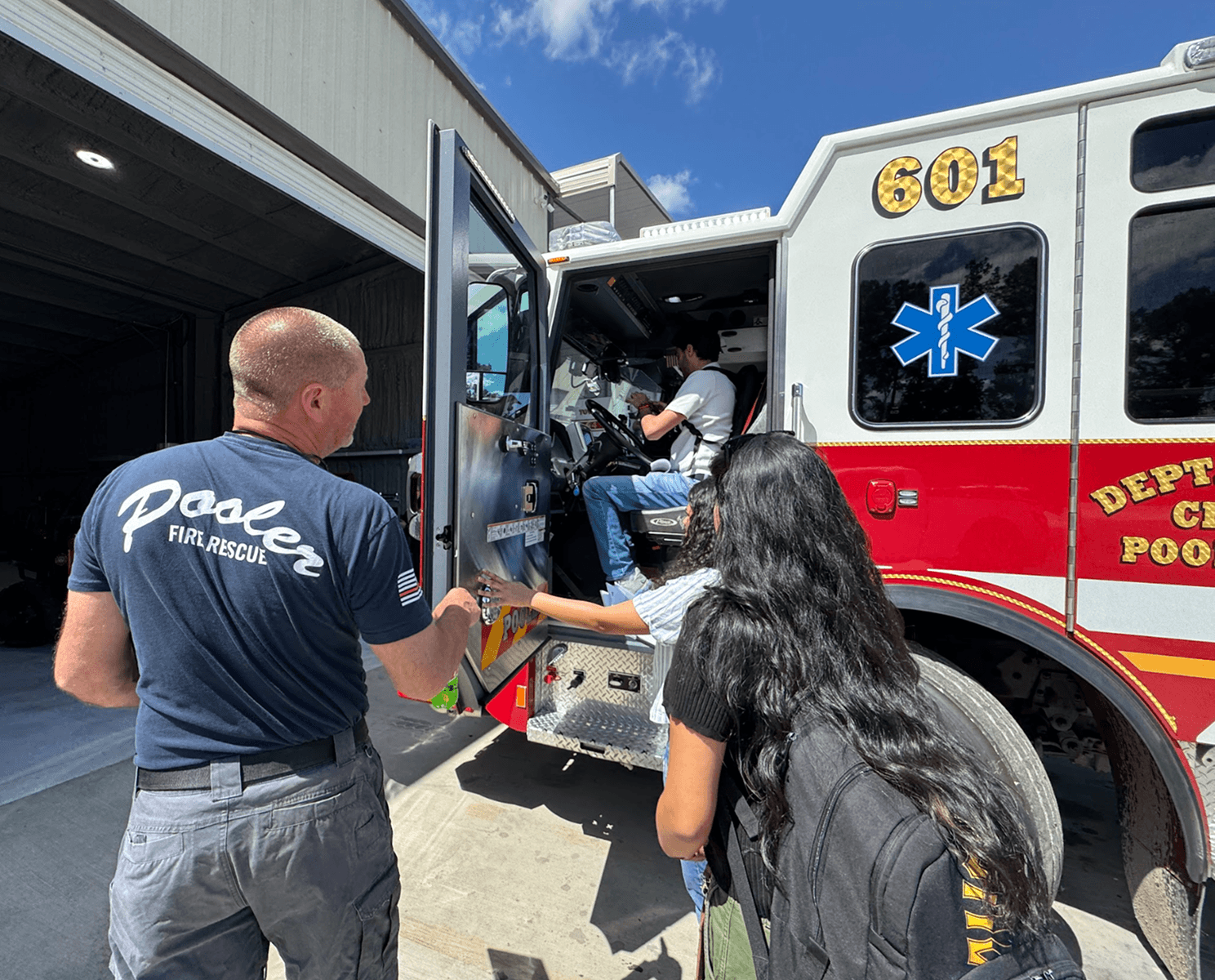
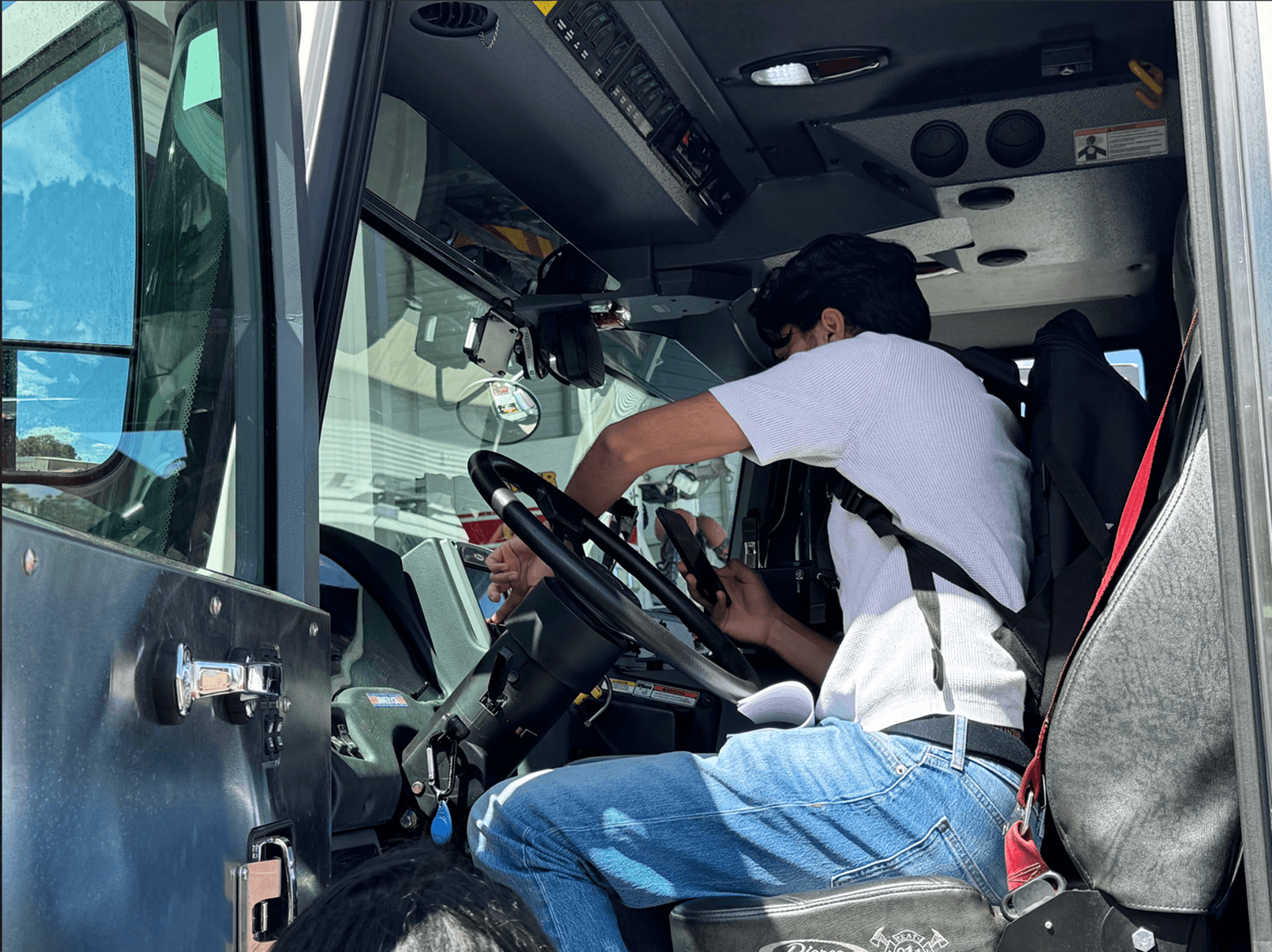
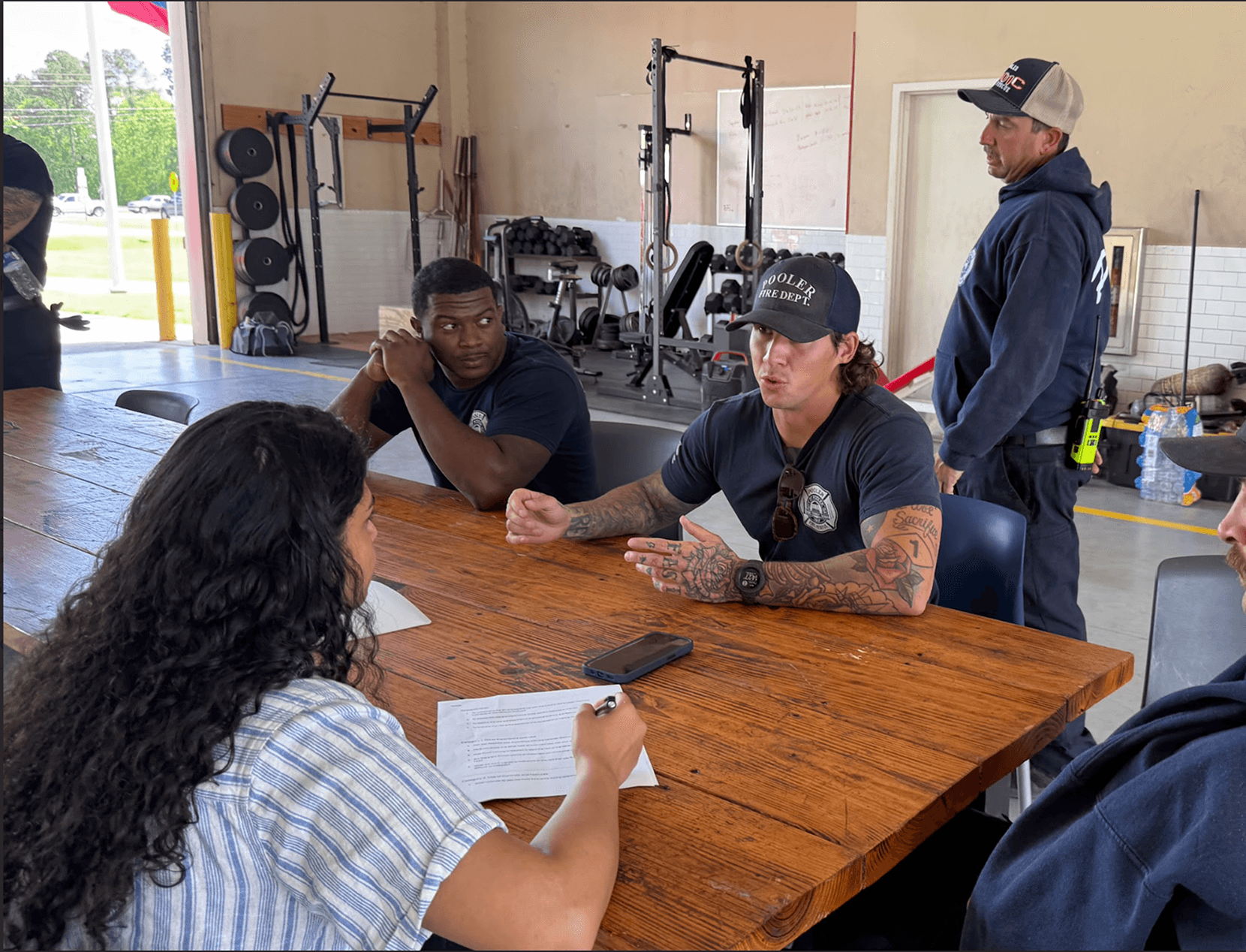
Initial research focused on understanding varying screen sizes, HMI principles, and the complexities of designing interfaces for high-stakes environments. Learning HMI design from the ground up was a new challenge, requiring us to quickly grasp how information hierarchy, touch targets, and visibility impact real-time decision-making. To move beyond assumptions and identify meaningful improvements, in-person conversations with firefighters were essential. These discussions revealed firsthand insights into how screens are actually used under pressure, what information is critical in the moment, and where existing systems fall short—grounding our design decisions in real-world experience rather than theory alone.
Secondary Research

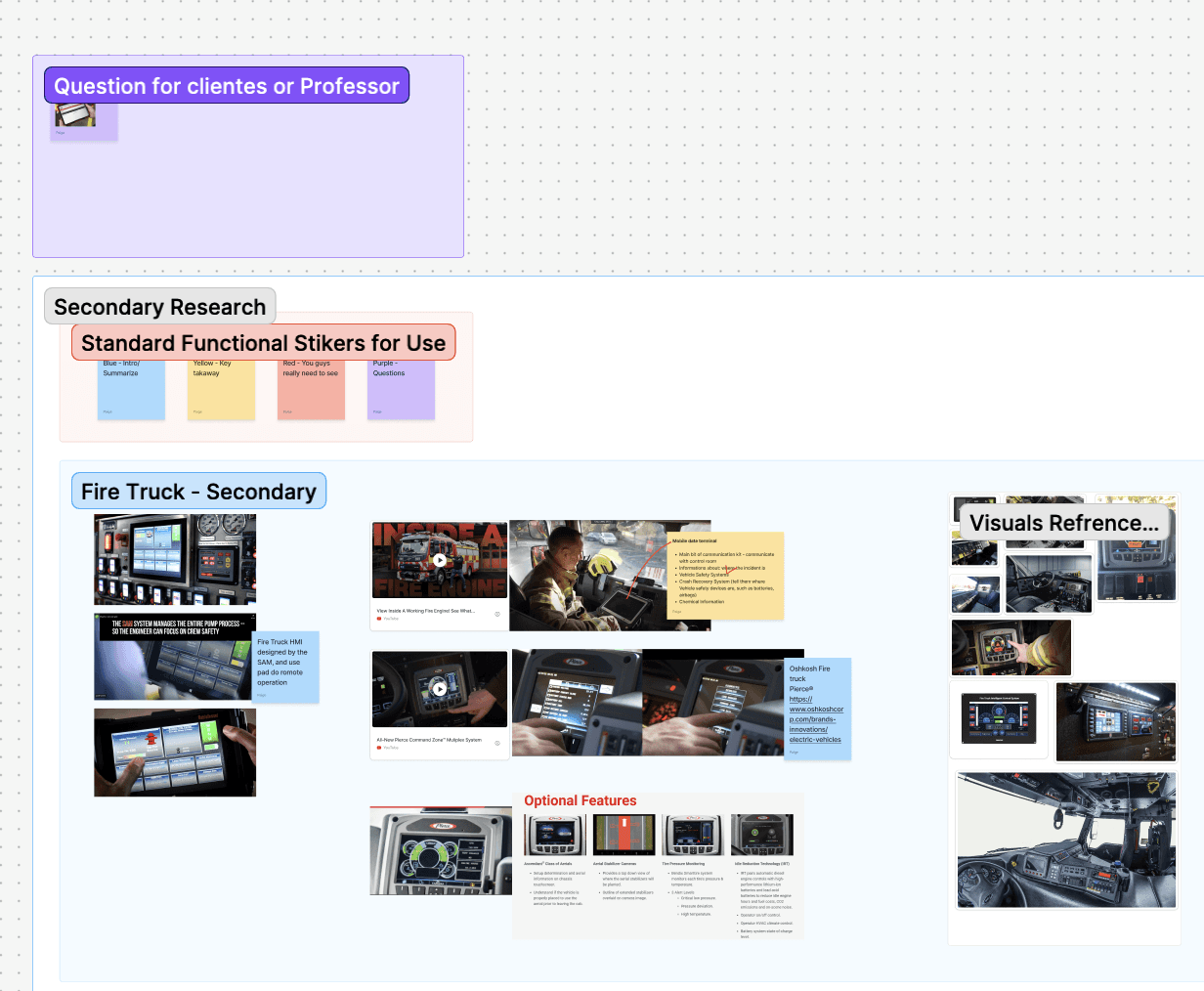
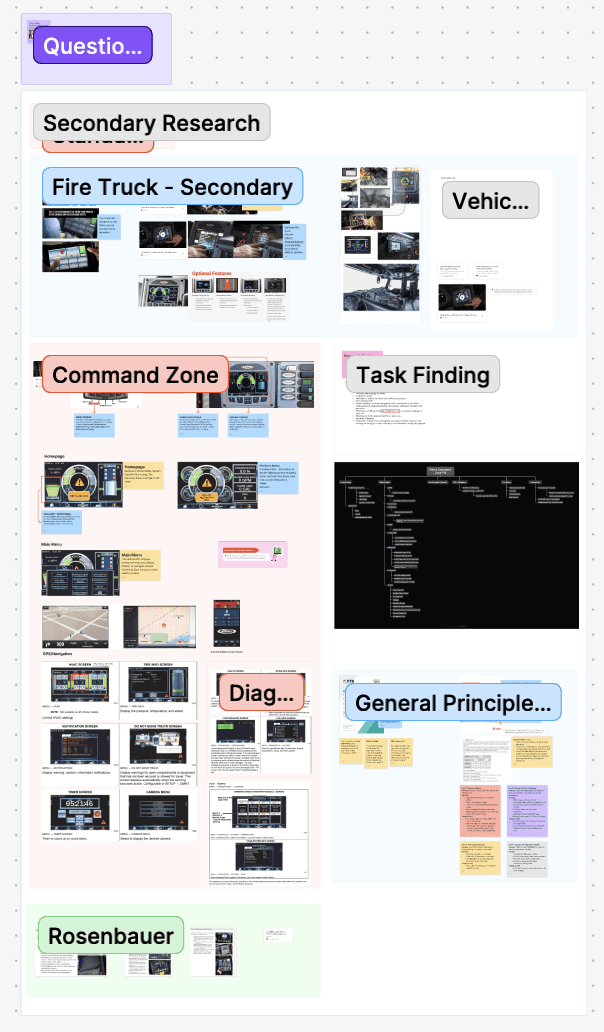
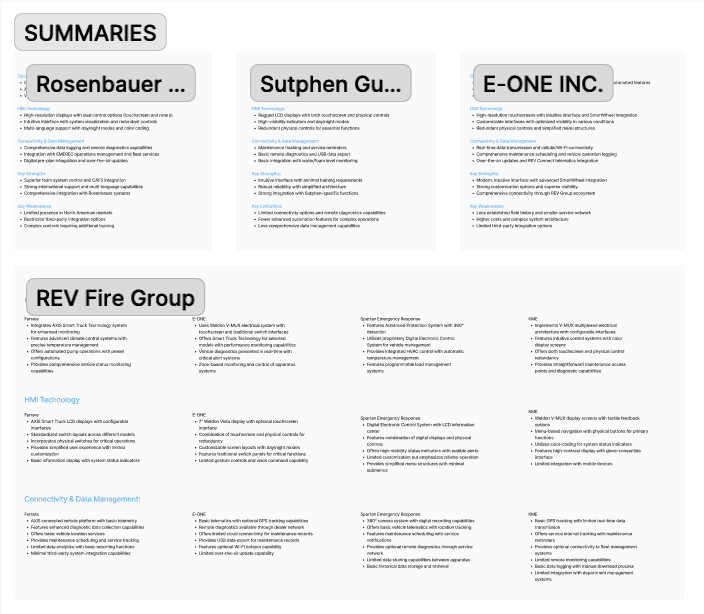
To inform our design decisions, we conducted extensive secondary research, beginning with a competitor analysis to understand how other vehicle manufacturers approached HMI layouts, screen placement, and overall dashboard functionality. We studied industry standards for screen sizes, alert areas, and visual ergonomics, focusing on how controls and information need to be positioned for optimal visibility and ease of use.

This research included examining academic and industry sources on Human-Machine Interface (HMI) design, visual distance requirements, and cognitive load, helping us understand how drivers process information while operating a vehicle. Insights from these studies provided a foundation for our own design iterations, allowing us to identify opportunities for improvement and innovate solutions tailored to each vehicle type.

I want bigger

buttons in the

system.

Participant 1

The Alerts on the

screen can be very

overwhelming,

causing more harm

than good.

Participant 1

The diagnostics

could be more

detailed for us

mechanics

Participant 4

Alarm silencing

is the most used

feature.

Participant 1

Error pop ups

take over the

entire screen,

even when driving.

Participant 2

Mechanics and

Firefighters use

the same screen

and need it at the

same time, causing

issues.

Participant 1

Due to the cluttered

UI on the screen, I

hit the wrong

buttons all the time.

Participant 1

UI is outdated, and

there are no system

updates.

Participant 3

I need a working

navigation screen

with no alerts

from the truck

Participant 2

70+ Qualitative Data Points

70+ Qualitative Data Points

  1. Simplify

  1. Organize

  1. Prioritize

  1. Reduce

  1. Gather

  1. Streamline

6 Short Term

Actionable Insights

6 Short Term

Actionable Insights

  1. Improving

    Navigation

    Features

  1. Training on

    use of UI

  1. Troubleshooting

    for Mechanics

    and Firefighters

3 Long Term

Actionable Insights

3 Long Term

Actionable Insights

I want bigger

buttons in the

system.

Participant 1

The Alerts on the

screen can be very

overwhelming,

causing more harm

than good.

Participant 1

The diagnostics

could be more

detailed for us

mechanics

Participant 4

Alarm silencing

is the most used

feature.

Participant 1

Error pop ups

take over the

entire screen,

even when driving.

Participant 2

Mechanics and

Firefighters use

the same screen

and need it at the

same time, causing

issues.

Participant 1

Due to the cluttered

UI on the screen, I

hit the wrong

buttons all the time.

Participant 1

UI is outdated, and

there are no system

updates.

Participant 3

I need a working

navigation screen

with no alerts

from the truck

Participant 2

70+ Qualitative Data Points

  1. Simplify

  1. Organize

  1. Prioritize

  1. Reduce

  1. Gather

  1. Streamline

6 Short Term

Actionable Insights

  1. Improving

    Navigation

    Features

  1. Training on

    use of UI

  1. Troubleshooting

    for Mechanics

    and Firefighters

3 Long Term

Actionable Insights

The Design Process

The design process was highly iterative, moving from research and concept exploration to wireframing, prototyping, and refinement, with each stage informed by testing, feedback, and continuous problem-solving.
The Final Design

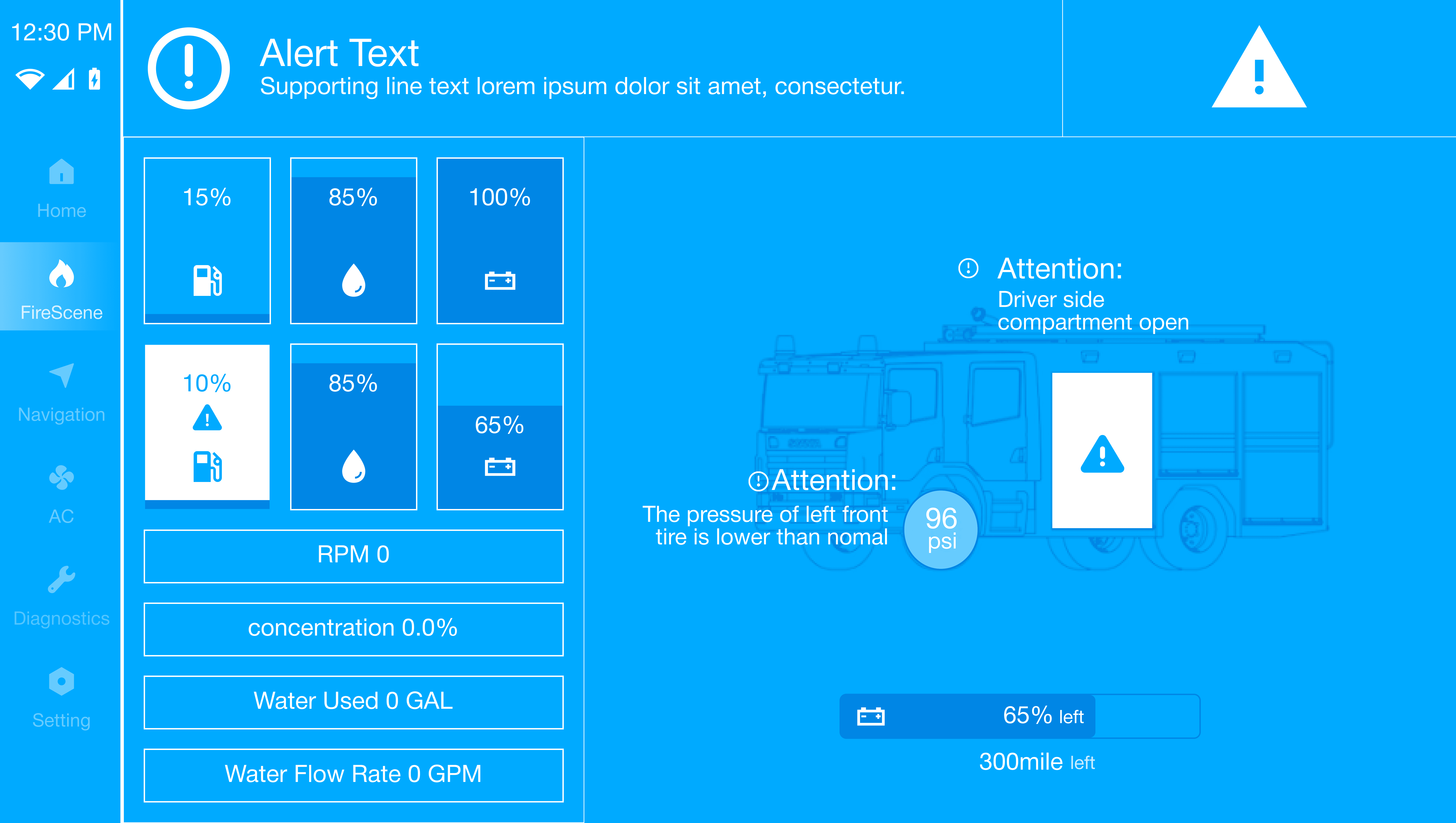
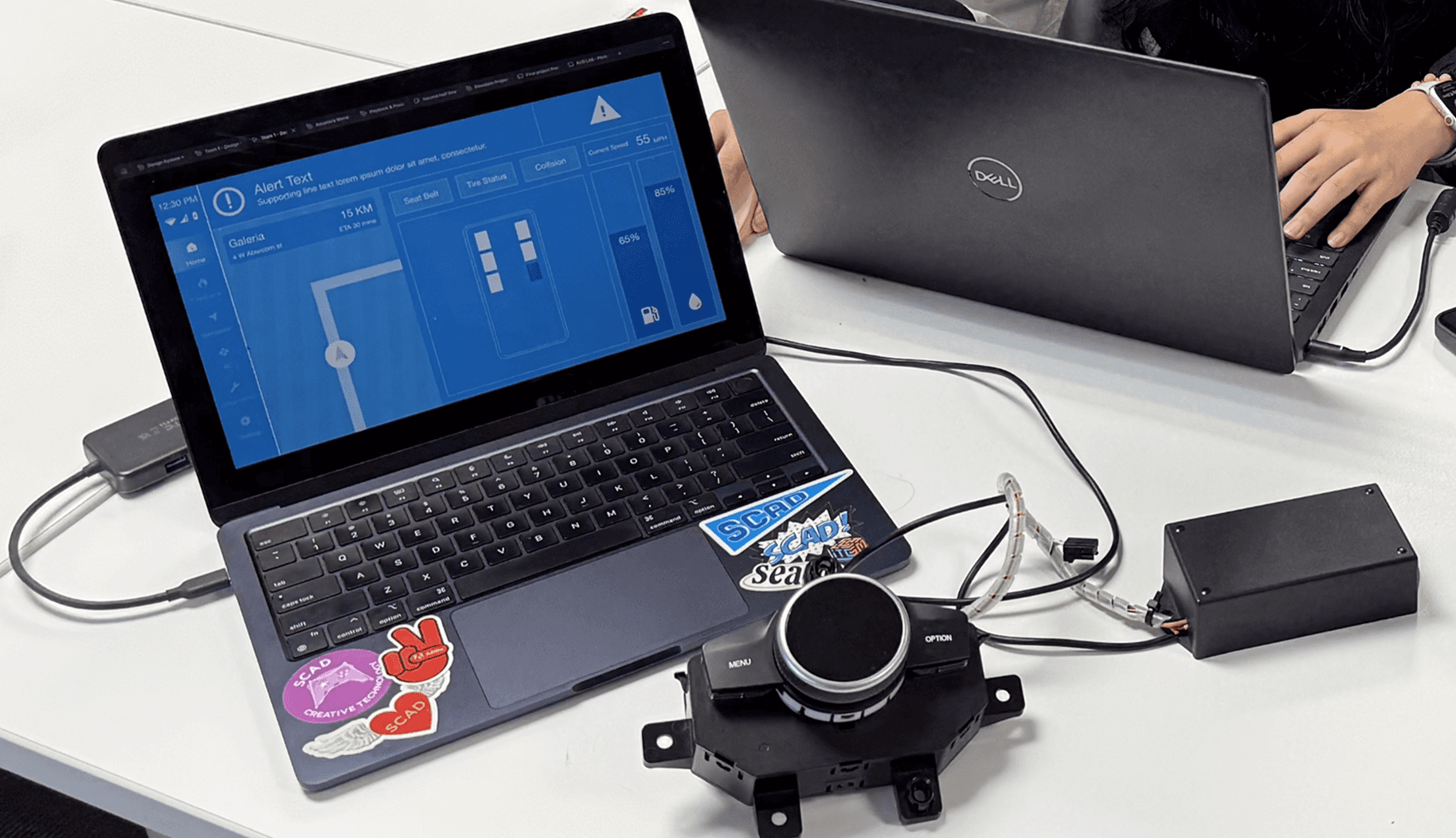
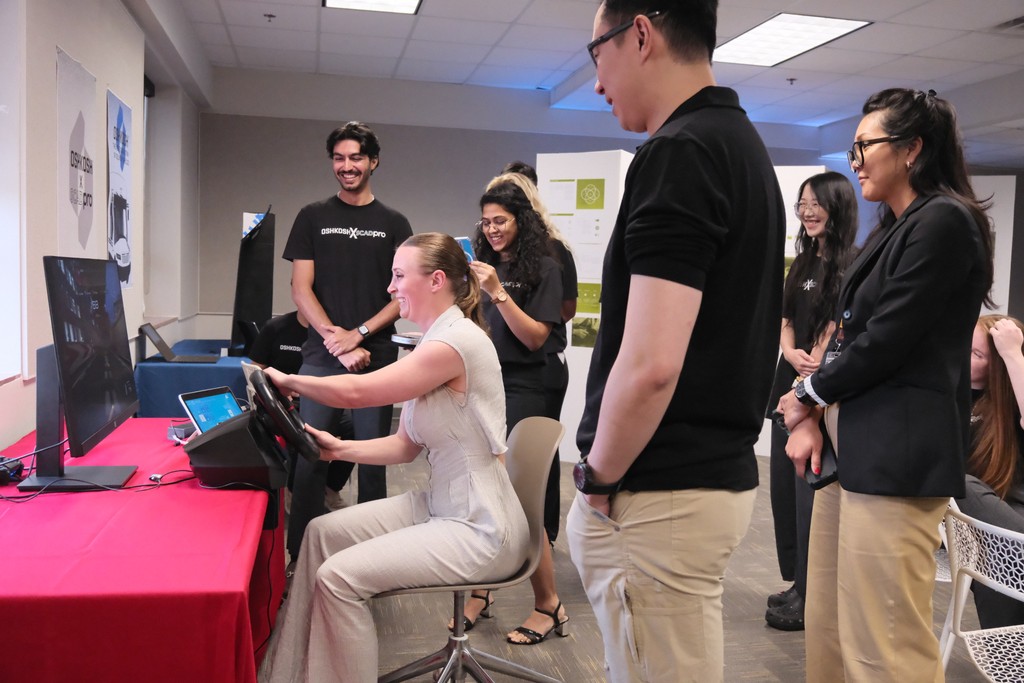
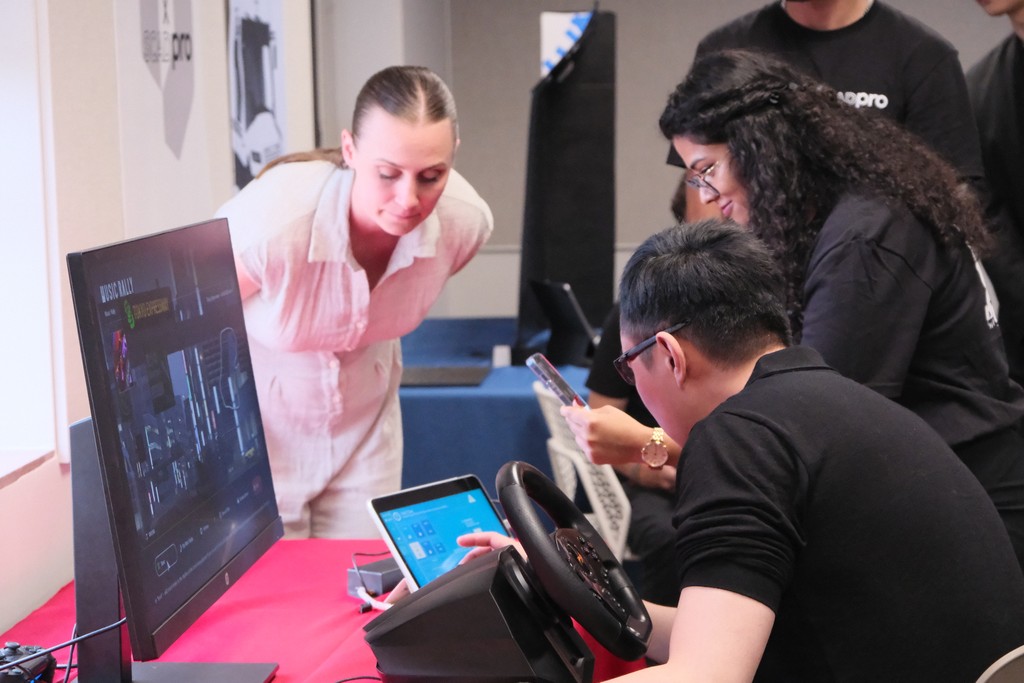
The final outcome was a realistic, high-fidelity prototype designed to be tested within a driving simulation, allowing designers and firefighters to interact with the system in real time while operating under high-pressure conditions, with a primary focus on saving critical time without compromising safety. In addition to the firetruck solution, two other design concepts were delivered to Oshkosh by the delivery and cement teams; however, those solutions are not included here, as my direct contributions were focused solely on the firetruck project
The Playbook

Below is a little look into the Playbook.
The Process Book

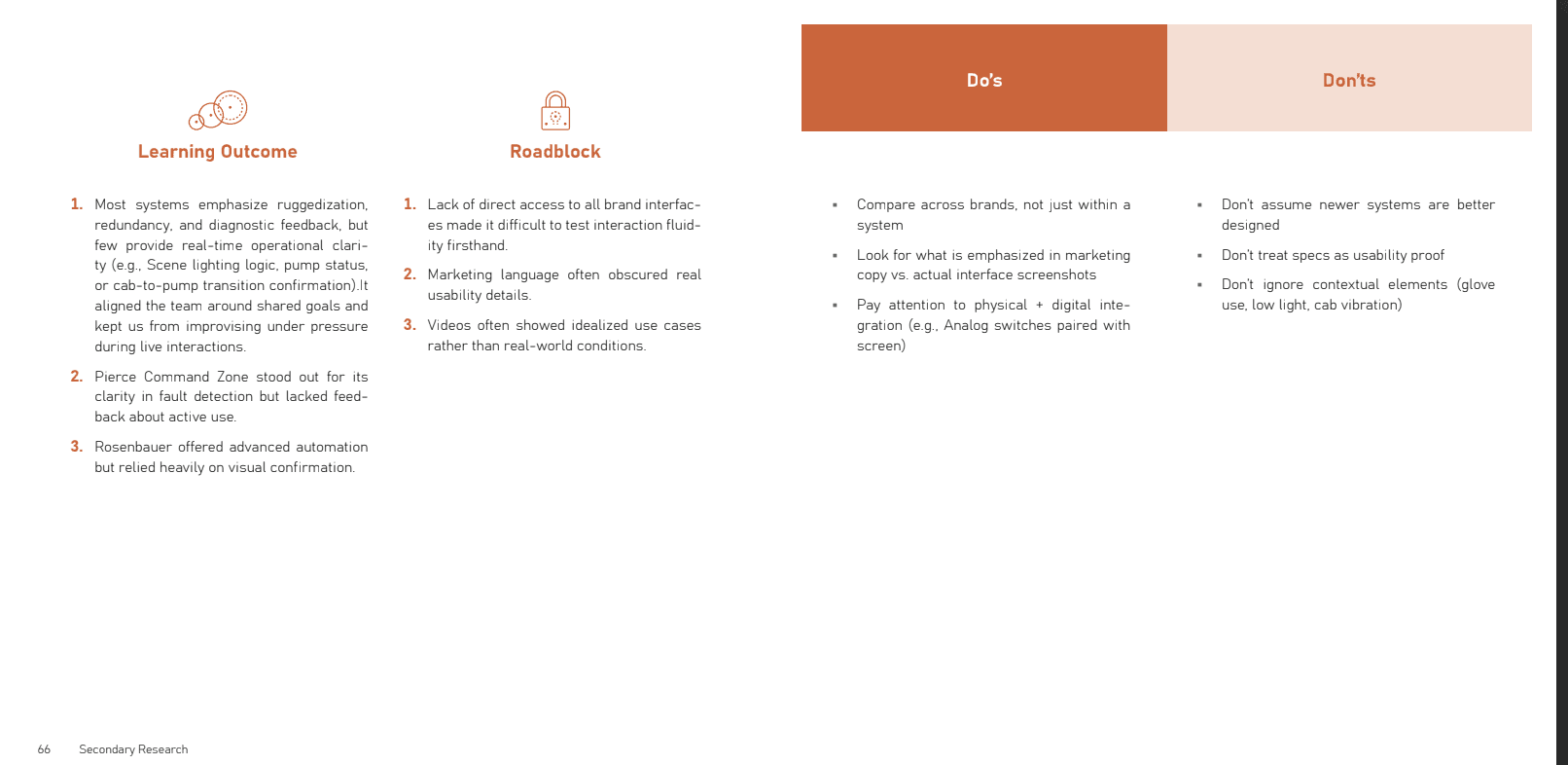
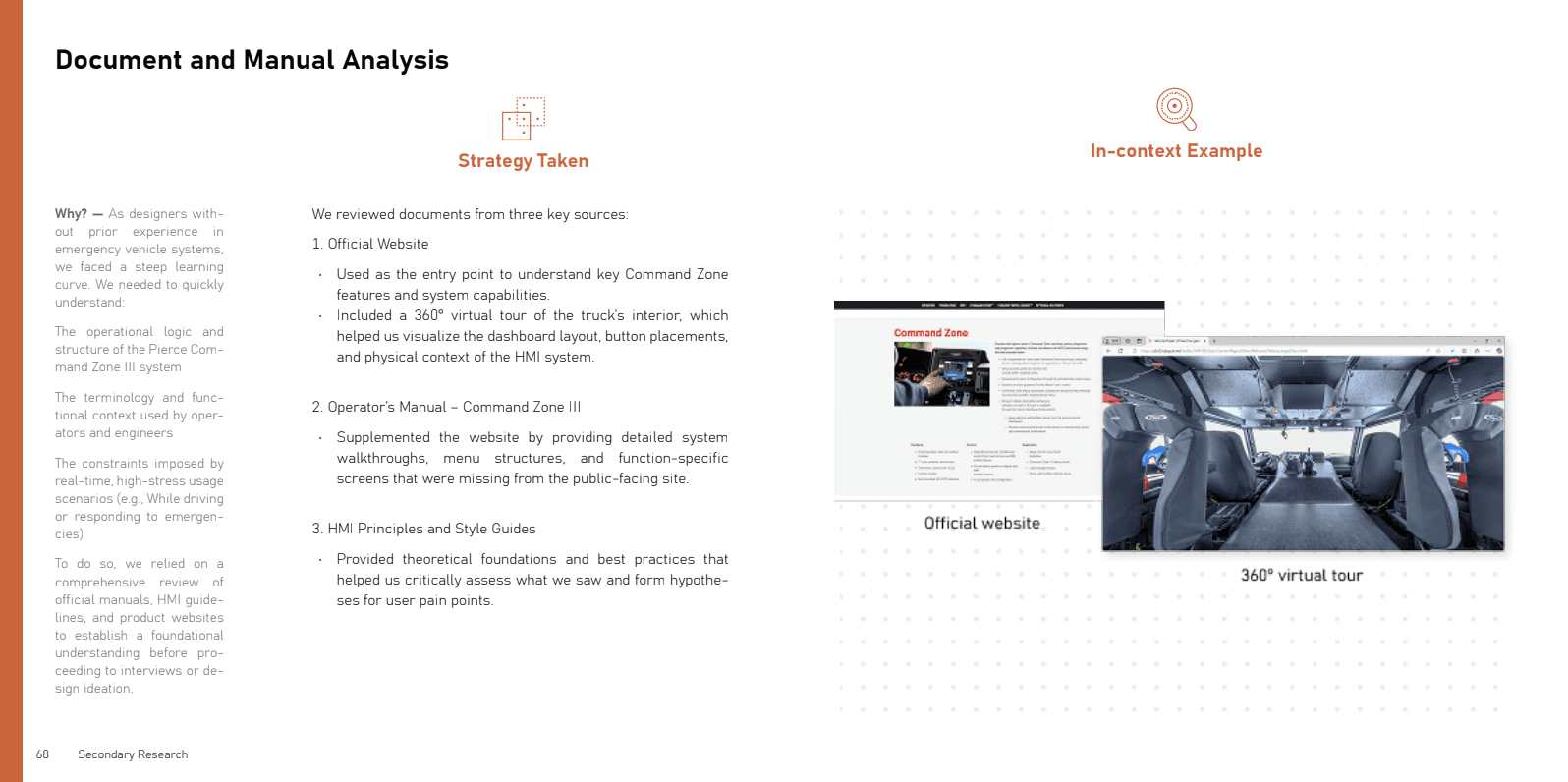
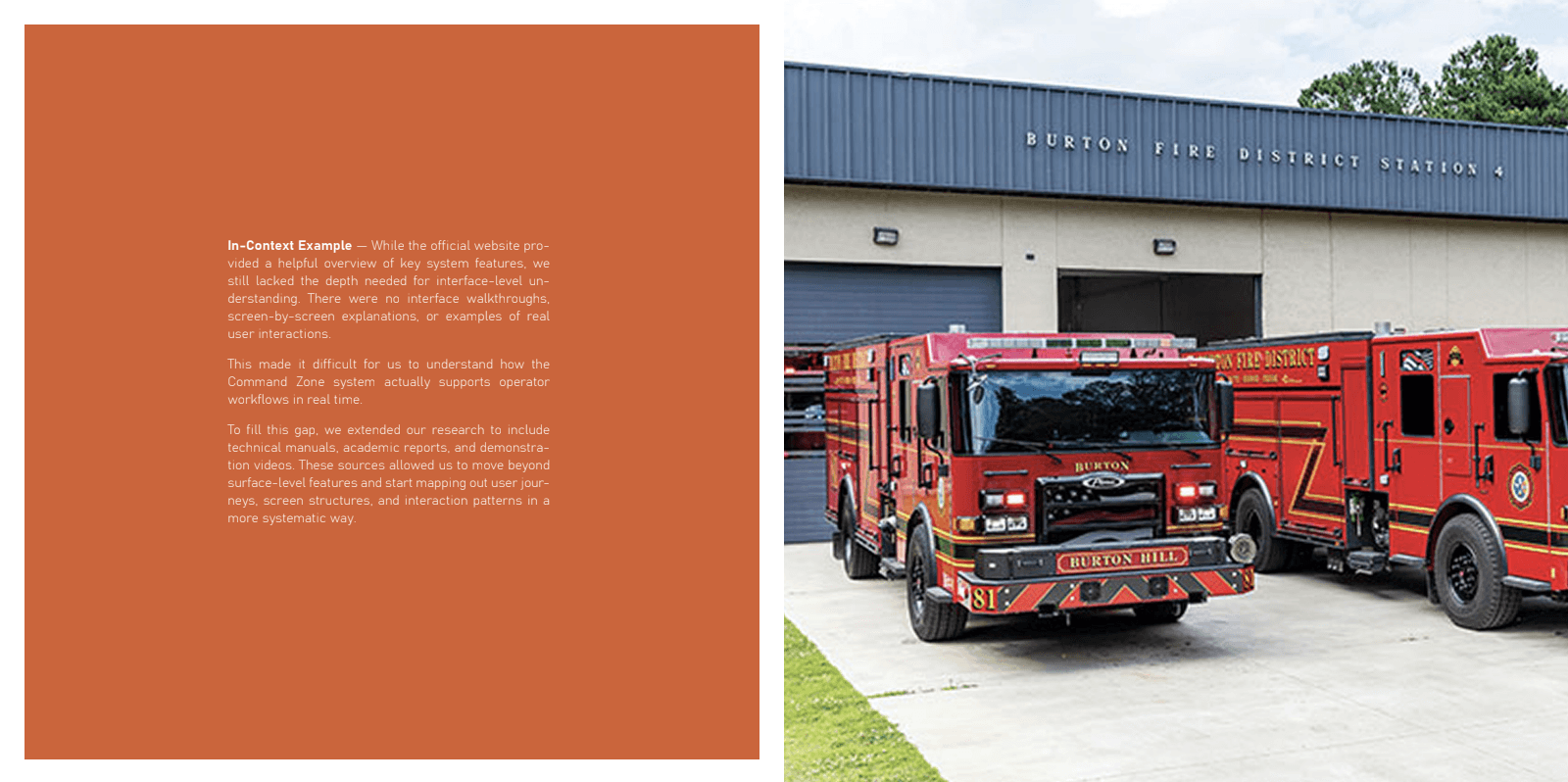
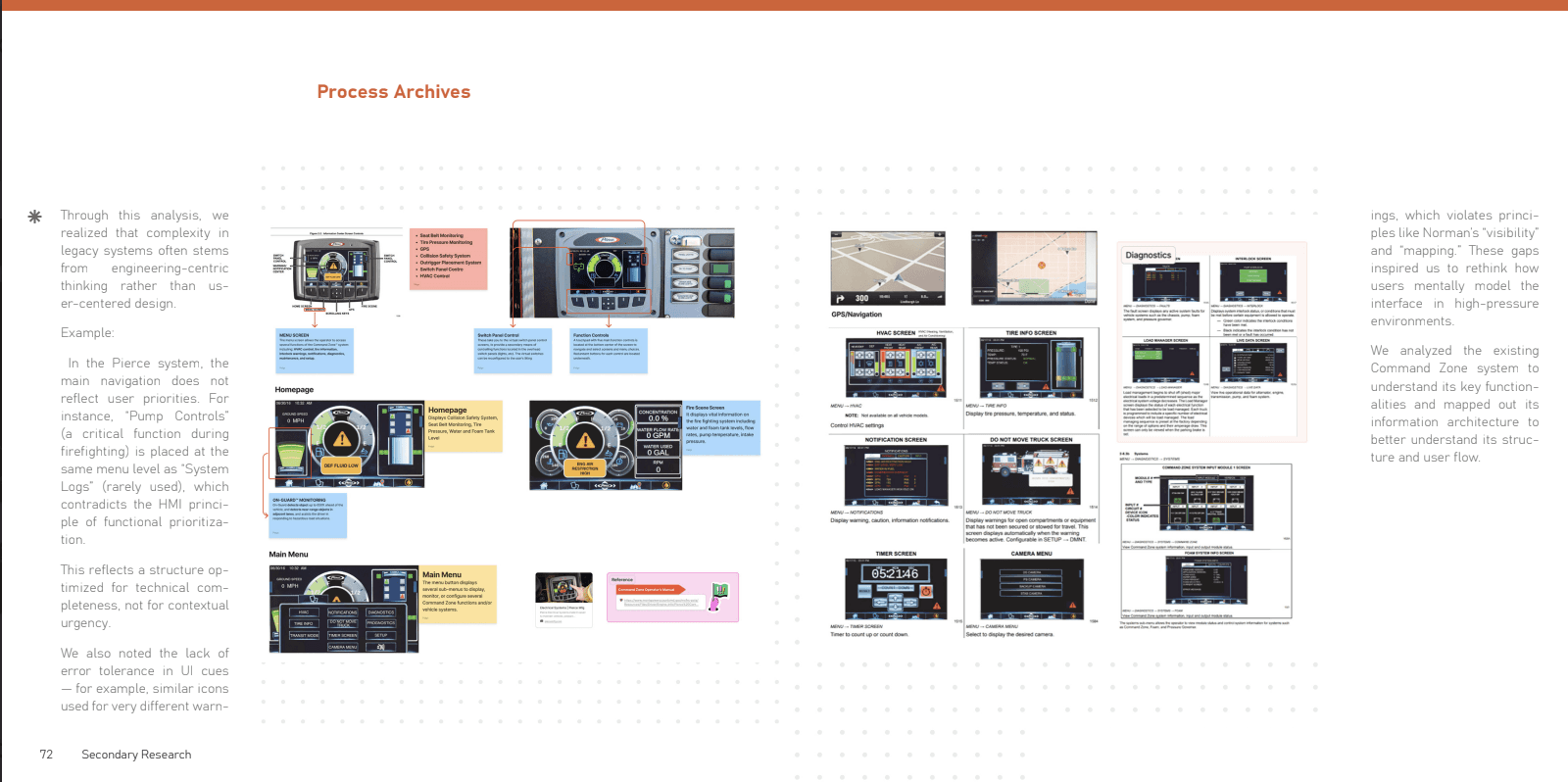
Below is a little look into the Process Book.
In Full:

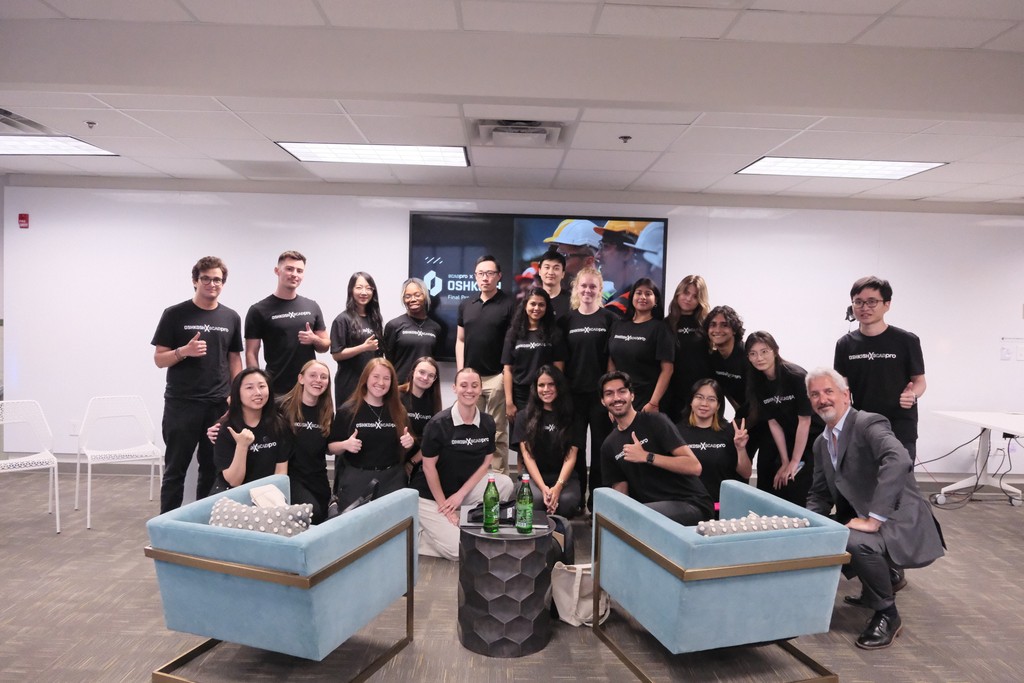
Over the course of this project, I led my team through an intensive and demanding design process that resulted in both a comprehensive process book and a client-ready playbook totaling over 500 pages. These documents captured extensive trial and error, allowing the client to benefit from refined, validated insights without repeating the same challenges. Through this work, we developed a deep understanding of HMI design, delivered a logical and innovative solution, and demonstrated how thoughtful leadership and collaboration can translate complex research into impactful, real-world outcomes.
Let's Connect:

© 2025 Mia Nelson. All rights reserved.

Let's Connect:

© 2025 Mia Nelson. All rights reserved.

Let's Connect:

© 2025 Mia Nelson. All rights reserved.

Enter password to view work

Home